
Toyota takes alternative fuels racing
World's largest carmaker still believes in the crucible of motorsport...
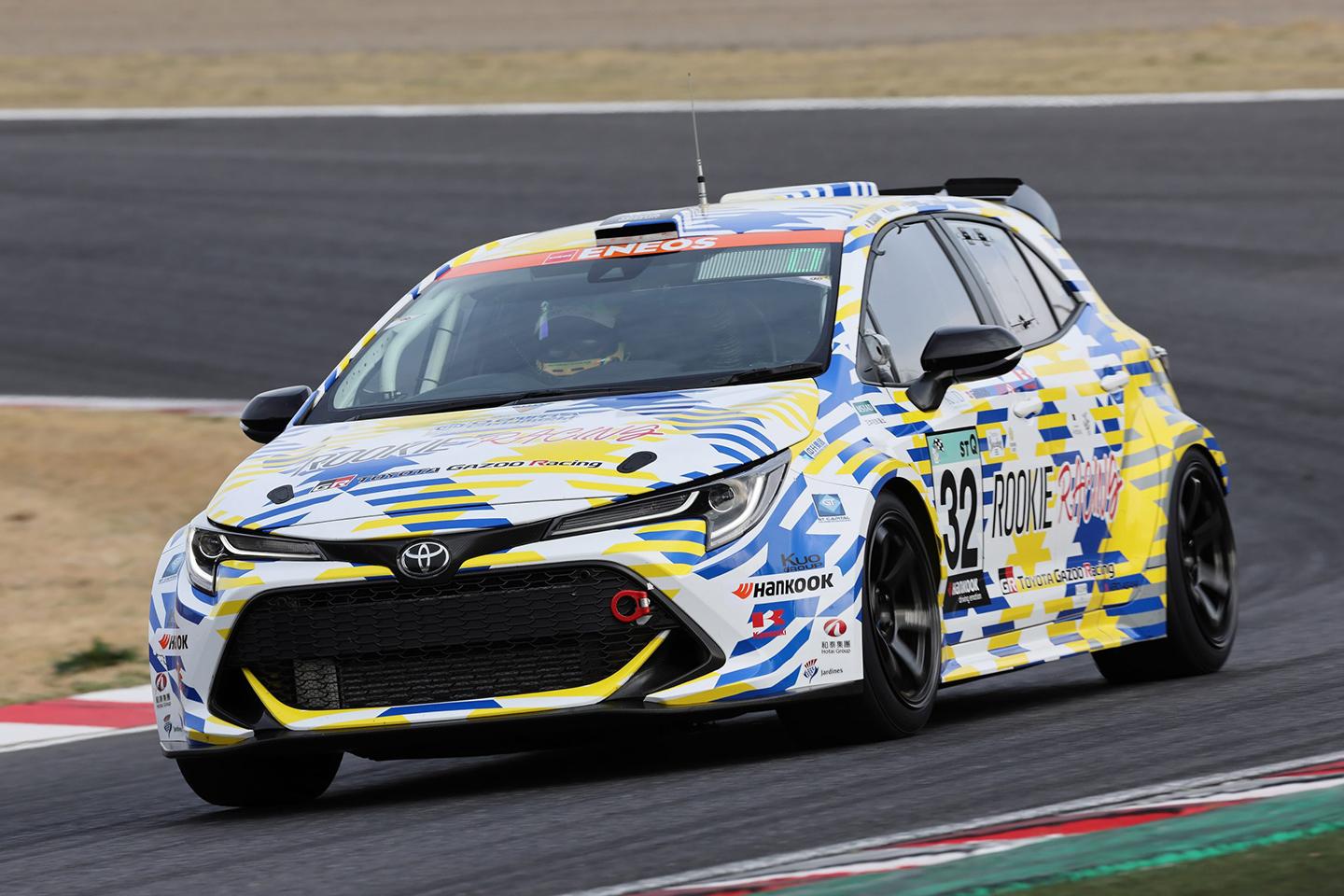
Toyota is going for glory in the 2022 ENEOS Super Taikyu Series with not one, but three cars powered by three different fuels. Well, no harm in hedging your bets, is there? If you haven't heard of the Super Taikyu Series, it's Japan's touring car endurance racing with cars ranging from FIA GT3 spec to those with effective displacements under 1,500cc. Races are held at circuits across Japan, including the Fuji International Speedway and Suzuka, where the season kicked off last weekend.
In the hydrogen corner is the Toyota Corolla H2 Concept. This actually made its debut in last year's series, running at four rounds between May and November. It runs a hydrogen combustion engine (note, it's not a fuel cell) and over that initial development period the engine's power was increased by 24 per cent and torque by 33 per cent. Toyota claims the power increases raise the hydrogen motor's outputs to a level that is comparable with petrol-powered engines. The team also got a handle on 'abnormal combustion,' which is the loss of performance and engine damage that results from cylinder knock or surface ignition.
This being endurance racing, refuelling is a part of the challenge and another area of development. Last year the team improved the Corolla H2's design so that it can be refuelled from both sides. This year it is taking on the challenge of "high flow filling" by upping the pressure that the fuel is under during refilling. Filling a hydrogen tank quickly causes a rapid increase in its internal temperature, which, obviously, is not what you want with a highly combustible fuel.
So Toyota has modified the filling port and the fuel pipes to handle larger flow rates without reaching dangerously high temperatures. This has already reduced the refuelling time from just under two minutes to one-and-a-half minutes. Clearly the fewer times you need to stop is another way to improve the car's potential. The Corolla H2's range has already been improved by 20 per cent since the end of the 2021 season, and further gains are targeted this year.
It's not just the racing car that's being worked on; how the hydrogen is transported is also being developed. Toyota has moved away from carrying it to the circuit in metal tanks and is now using lightweight resin liners. Their design is based on the high-pressure fuel tanks for the Toyota Mirai fuel cell car. The higher pressure the fuel is held under increases the quality of hydrogen on board by around four times. It's also worth noting that for last weekend's five-hour race at Suzuka, the Corolla H2 Concept used hydrogen derived from solar power.
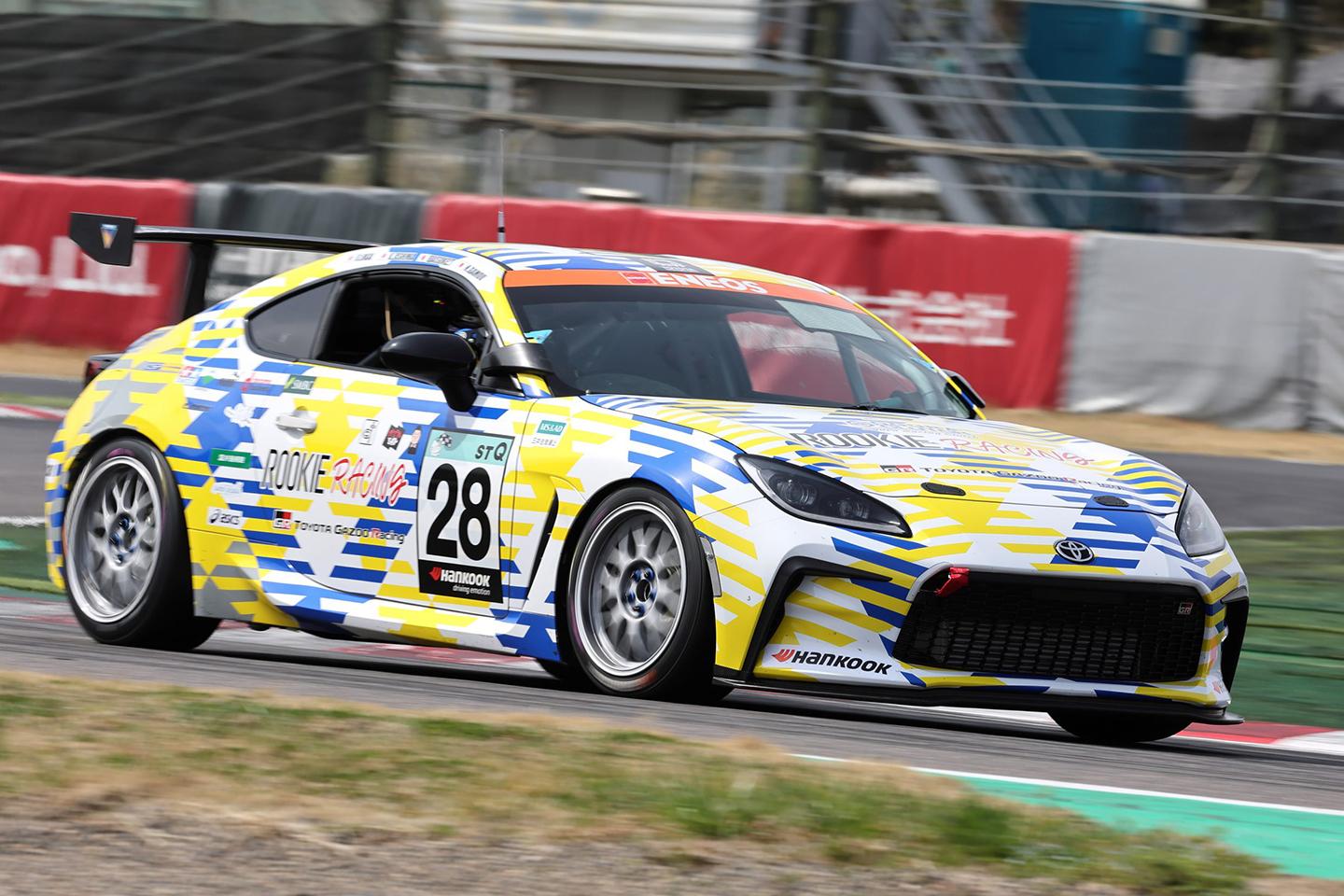
Next on the entry list is the GT86 CNF (Carbon Neutral Fuel) Concept. Instead of a flat-four, this uses a 1.4-litre inline motor based on the GR Yaris's engine (and also the engine used in the Corolla H2). The fuel used emits similar amounts of CO2 to a fossil-fuelled car, but because the fuel is made entirely from CO2 already present in the atmosphere, it is considered carbon neutral.
It's a similar philosophy to the Prodrive Hunter T1+ cars at this year's Dakar Rally, which used a 90 per cent concentration of GENII biofuel. Toyota says it "will be able to use motorsport as means of training, discovering issues, making improvements and exploring the possibilities for future practical applications of the fuel, with a view to expanding internal combustion engine fuel options." Hurrah to that. And the world's largest car manufacturer will even be sharing the information it gleans from its racing endeavours with series' rivals Mazda and Subaru, which are also fielding bio-concept cars.
And finally, there's a petrol-powered GT86. The this is running racing-grade petrol, and it's the nearest of the trio to a production-spec car. As with the GT86 CNF Concept, the GT86 will be used to evaluate developments for the forthcoming GT86 that we drove in prototype form late last year.


The article also refers to similar levels of power gains, so maybe they improved the engine's power output from the same fuel flow.
Or maybe they added an extra tank....
I'm also curious where exactly they think HICE fits in to the car market, that choice of phrase 'fits in' was intentional.
At some point they, and anyone else suggesting HICE has a role to play, need to come clean about the on-board storage situation.
Whilst you can just about make a case for hydrogen cars if you are also carrying a fuel cell and battery to get the very best out of what energy you can actually store, the combination of hydrogen and a relative low thermal efficiency ICE leaves you with a laughably enormous amount of the car's volume given over to fuel tanks.
Who or what can afford to carry around many many hundreds of litres worth of tanks in a car in the interests of also having an engine to play with???
It's either that or an abysmal range, so please someone tell me where this combination of fuel and thermal efficiency has a role to play?
And yes, I'm not joking about that sort of tank volume. This issue arises from the remarkably low volumetric energy density of gaseous hydrogen, despite it being pressurised to 700 bar. Compounded by the fact that the tanks are low aspect ratio, thick-walled cylinders that cannot hold enough hydrogen to power an ICE without having something like 4 or 5 separate tanks in each car.
This all results in the comparative volumetric energy density between a petrol tank and a hydrogen tank array of something like 30 MJ/litre vs 4 MJ/litre.
It really is almost 10 times as bad. No amount of handwringing about lovely combustion noises or wishful thinking about magic pastes can change this.
Being cynical, is it that they know they can keep a higher level of interest in hydrogen fuel cells car by powering racing cars with ICEs and just glossing over the fact that the road car will never exist?
Do we really think a workable solution for HICE punters is ever going to exist?
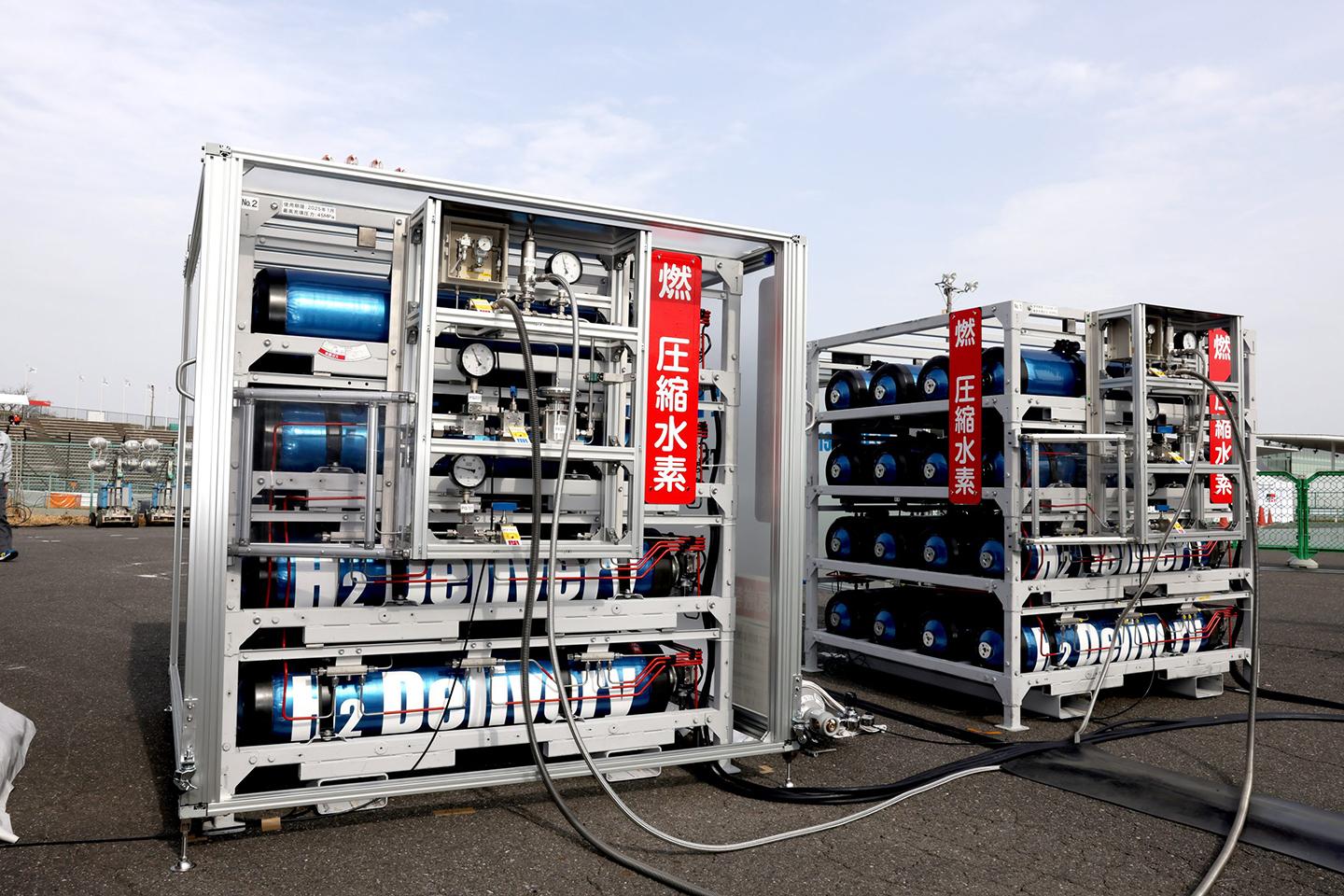
Take a look at the last picture.
There are 32 separate tanks in that picture,16 tanks per crates, 2 separate crates.
Whilst we don't actually know how many cars that fuel if for, it does say they refuel from both sides of the car, so I think that it's actually quite likely that that is the fuel required for 1 car for 1 race.
There's your problem right there.
Those are exactly the same tanks the car has, and all they are doing is empty those into the car's tanks, many times each race.
So if you want a car that can go several hundred miles on one fill-up, you are looking at probably half a dozen of those same tanks in your sporty car.
If you want to carry passengers or luggage, where are you going to put them?
So how to they 'make' petrol using CO2 from the atmosphere?
We're missing some key info here
And just keep very quiet about where you got the CO2 from because it ain't from the atmosphere.
 . Give it a cool name like 'carbon capture' but don't let in what you're doing to create the CO2 in enough volume to be able to capture it.
It is produced as an element (H2) by several methods, including cracking water using electricity, which can be achieved without producing carbon dioxide if the electricity is produced renewably.
It is all but useless as a transportation fuel unless compressed or liquified.
Liquid hydrogen requires storage at -253 degrees C, so at present the only viable option for cars is to compress it to 700 times atmospheric pressure, which is what is in those tanks you see.
The tanks are under such a massive amount of internal pressure that they can only be round in section, with a very thick wall and not more than a certain diameter.
Carbon fibre is used to give the strength required and to keep the weight of the tanks to a minimum.
Even after all that, you only get enough hydrogen in one of those tanks to cover tens of miles if you chose to burn it in a combustion engine which loses the majority of the energy stored in the tanks straight to heat in the engine's radiator.
It's an incredibly wasteful way of using electricity to power a car. After losing a fair chunk of electrical energy in both the electrolysis and compression processes, you then go and burn it in a low efficiency engine. which in turn makes the space required to store enough of it in the car a major stumbling block.
If you think this should be applauded, great, I'm certainly not convinced myself.
If you want to drive an ICE, just use petrol.

Oh and clearly this has no future whatsoever "This has already reduced the refuelling time from just under two minutes to one-and-a-half minutes".
TX.

And just keep very quiet about where you got the CO2 from because it ain't from the atmosphere.
. Give it a cool name like 'carbon capture' but don't let in what you're doing to create the CO2 in enough volume to be able to capture it. Green hydrogen is not commercially proven yet. We're hoping to achieve that by around 2025 when HIF, the leading project starts testing. Nor can you capture CO2 from the atmosphere commercially as there is almost no CO2 in air. The leading firm in that area is Carbon Engineering in Canada and they have one rear rig that haemorrhages cash while they are running around trying to find a government that will give them a load of money. Last I heard they'd come close to sucking in Scotland, an easy target as it's not their money.
The science for green hydrogen and atmospheric carbon capture along with converting them to C4-C12 hydrocarbons has all been around for over 100 years and is nothing new at all. It's just not remotely efficient or commercial.
The big clue is that if green hydrogen genuinely existed then we'd be burning it in power stations to keep humans warm. We're not because it doesn't. And likewise, if you could actually remove CO2 from the atmosphere then we wouldn't be wasting any time of money on any of the eco or net zero stuff but instead just producing as much CO2 as we wanted and then sucking it out of the atmosphere!
So you can create a bit in labs for motorsport as that industry can afford the monumental costs. But even then you have the problem that you're taking vast amounts of green electricity that's needed to keep our domestic fuel bills remotely affordable.
The whole problem with this particular area is that it is riddled with grant and subsidy fraud. Hundreds of shell companies taking in vast sums of government subsidies and lax investment capital on the back of fantastical dreams and pseudo science. Pumping out vast amounts of PR to a media that is lapping it while actually doing nothing other than sucking the cash out into their pockets for as long as the party lasts.
Countries like the U.K. will have gone fully EV long before viable products appear and these will be destined for developing nations as cheap oil runs out and their economies collapse.
For the U.K. we are going to start seeing a lot of news about green hydrogen where, if proven to be commercially viable, it will be an integral solution to transporting electricity from developing countries to here. Wind and solar in those countries will be converted to hydrogen, tankers filled and sails to U.K. ports where it will be burnt port side back to electricity and carbon credits produced to be sold to meet huge net zero demands. Nothing will be wasted on road cars.
Once the energy arbitrage network is using all the green hydrogen it can the next step will be using it via Born Haber to create green ammonia and then green fertiliser and more carbon credits but you're well into the 2050s by then.
It cannot be underestimated how important Green hydrogen is to Europe. Never more so now due to Russia. But it's far too valuable to use in conventional road transport and it's actually questionable whether it's morally right to waste it on motorsport when every molecule is needed for domestic utilities and food production!

If you want to carry passengers or luggage, where are you going to put them?

Looks like it's not passengers!
Oh and clearly this has no future whatsoever "This has already reduced the refuelling time from just under two minutes to one-and-a-half minutes".
TX.
And just keep very quiet about where you got the CO2 from because it ain't from the atmosphere.
. Give it a cool name like 'carbon capture' but don't let in what you're doing to create the CO2 in enough volume to be able to capture it. Gassing Station | General Gassing | Top of Page | What's New | My Stuff