
US market driving combustion Alpine A110 decision
North America's appetite for gas-powered sports cars could make an ICE A110 impossible to ignore
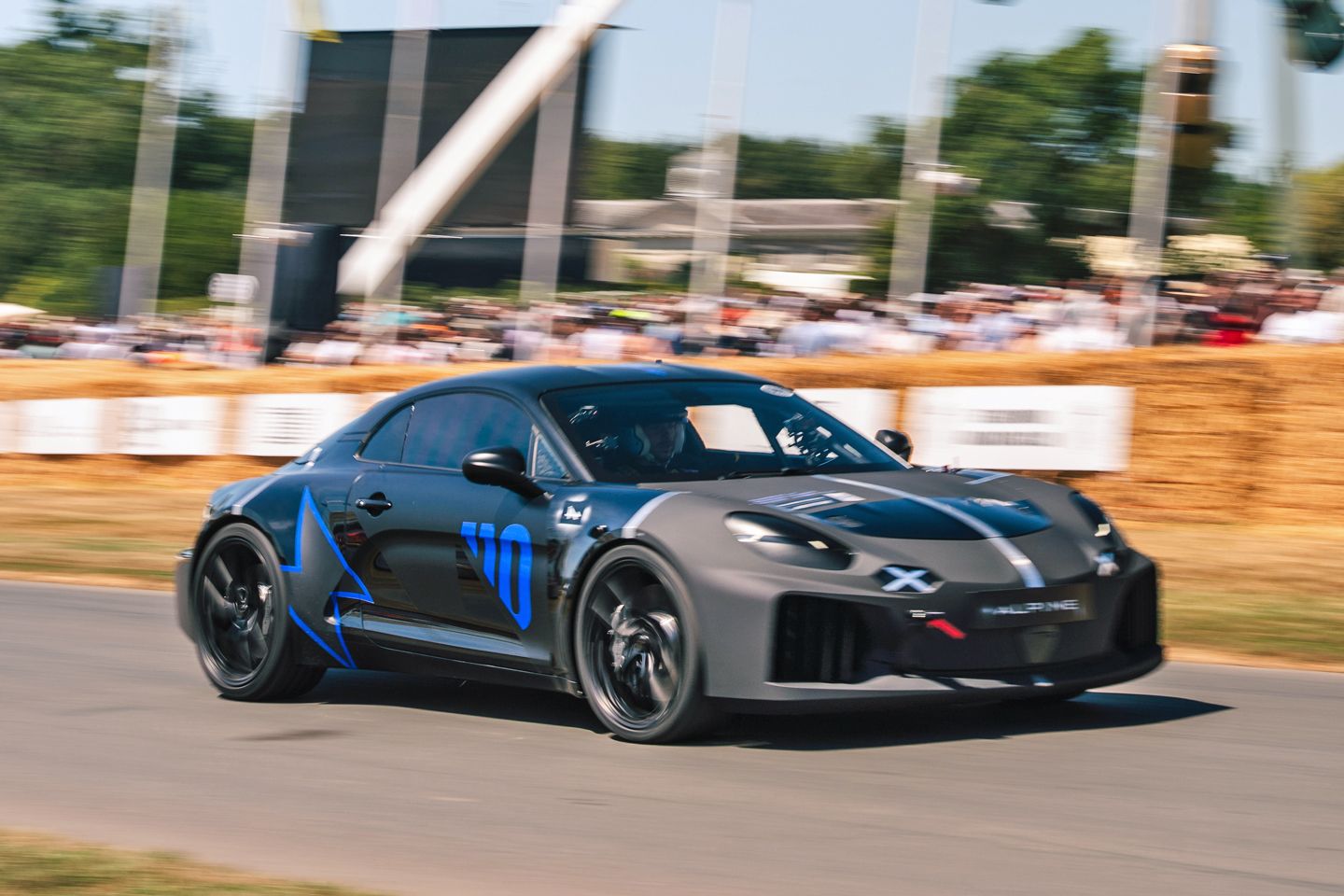
Good news A110 fans. Alpine’s planned US market entry is making the chances of a petrol-powered A110 successor more likely, with brand CEO Philippe Krief again confirming that the APP platform can be modified to accommodate engines. The much-slower take-up of EVs in the US, where they represent just five per cent of market share, means only offering an electric A110 there would likely hold back (read: practically kill) the prospects of sales success. Who’d have thunk it?
“We will finish our [A110 development] programme by October, so by then we will know how much it will cost to develop a petrol version,” Krief says. “So by the end of Q4 2026 we will know; we will be ready to push on the button and if we do, it will take about two years [to get the car to production].”
Krief explains that Alpine’s home market is actually the biggest hurdle to the prospects of a future A110 petrol being created, because taxes on new ICE cars in France “are extraordinary”. How to overcome that is yet to be decided, but he does suggest two routes for pricing. The first is “to position the car high”, to move it into the world of wealthy buyers less concerned about tax fees, although that would likely skew the positioning of the brand. Alternatively, Krief says the price could “go low”, presumably by keeping the petrol car simple.
Whatever route Alpine decides is more feasible for a combustion A110, the other hurdle is obviously deciding what would power the new model. The outgoing car’s turbocharged 1.8 won’t provide the solution, as it’s deemed too cost-prohibitive to get that to Euro 7 standards. There aren’t many options on the Renault engine bench either, with the line-up consisting of hybridised 1.0- and 1.2-litre blocks, or its 1.3 TCe. Perhaps the latter would be the ingredient of choice if they went “low”, price wise.
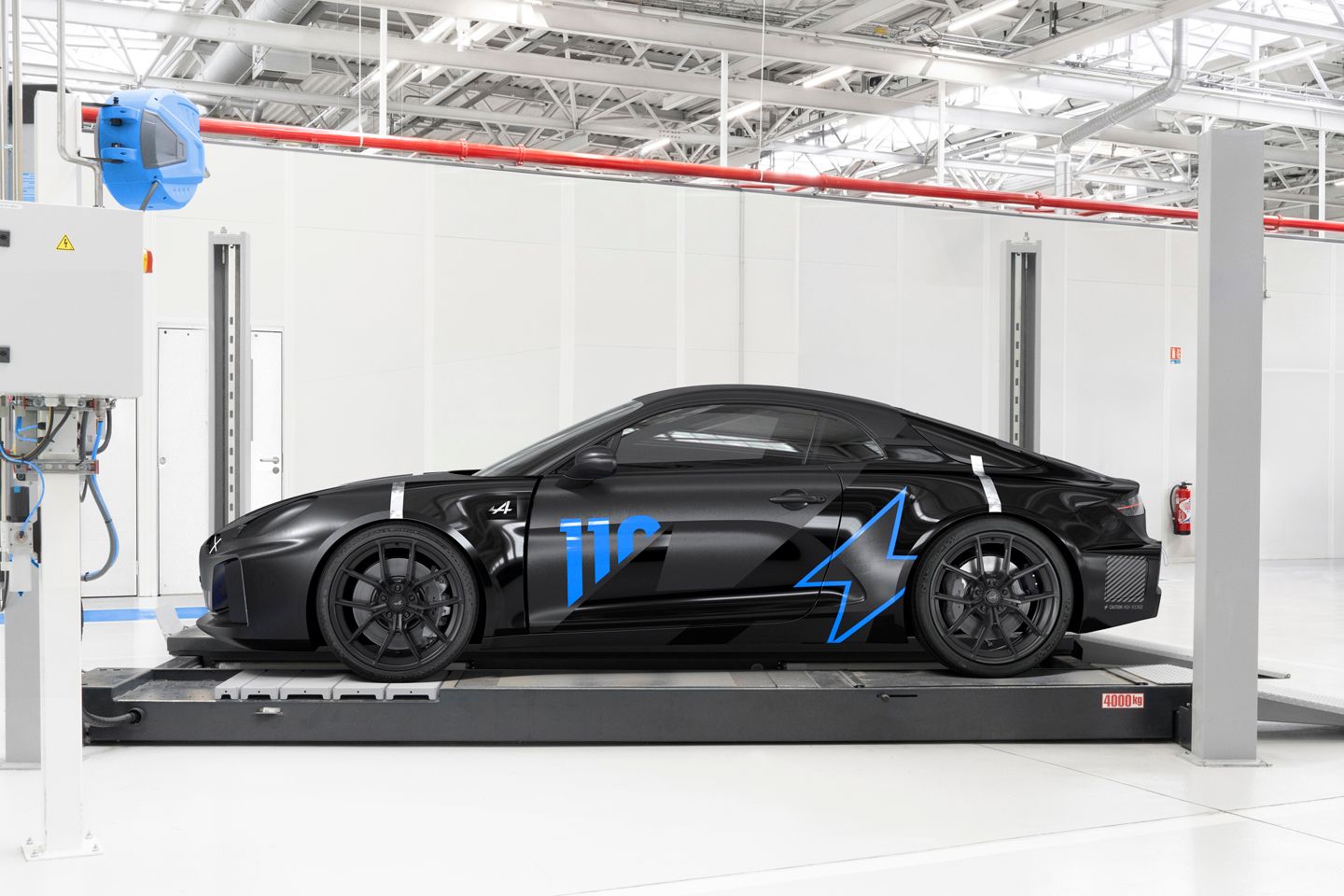
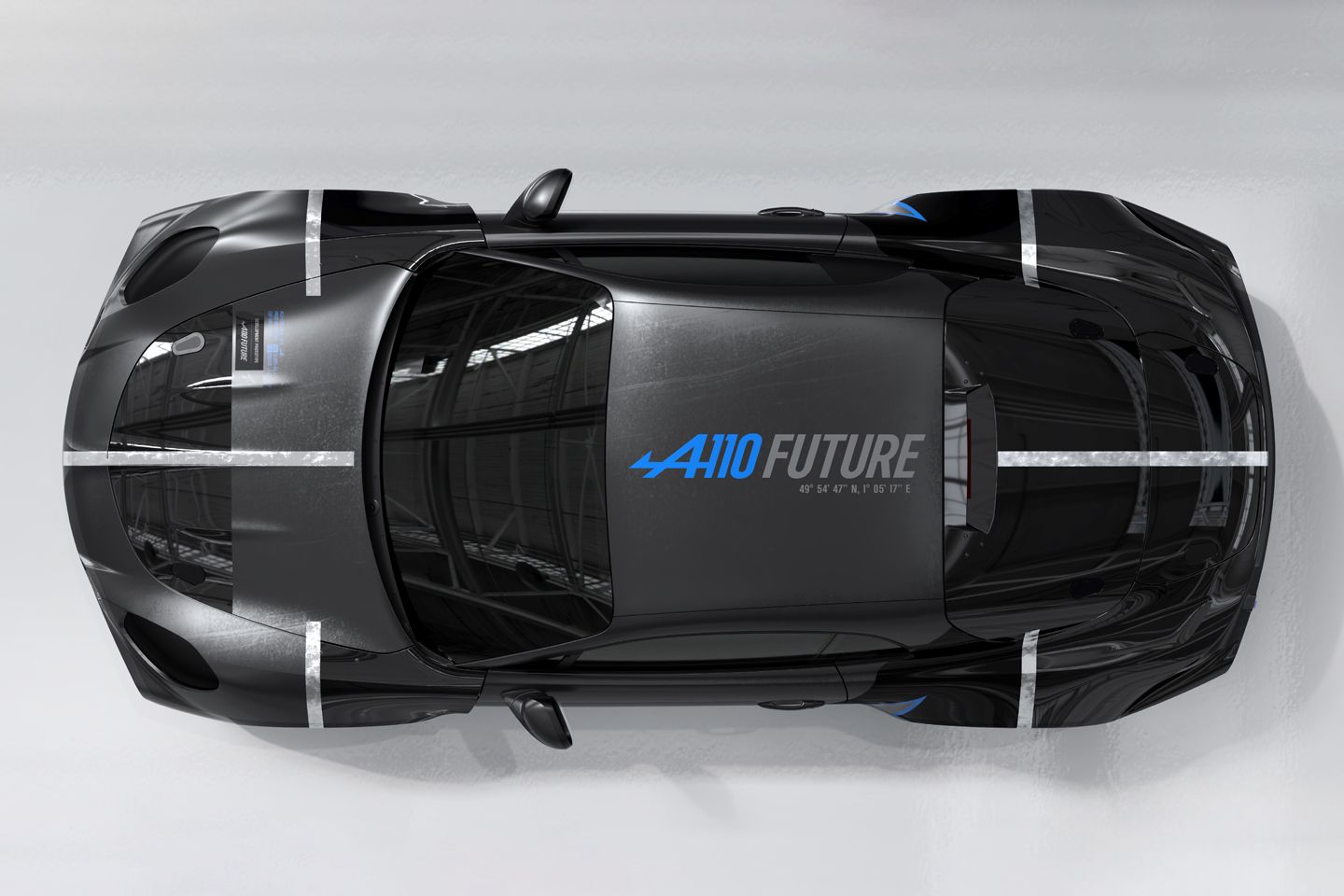
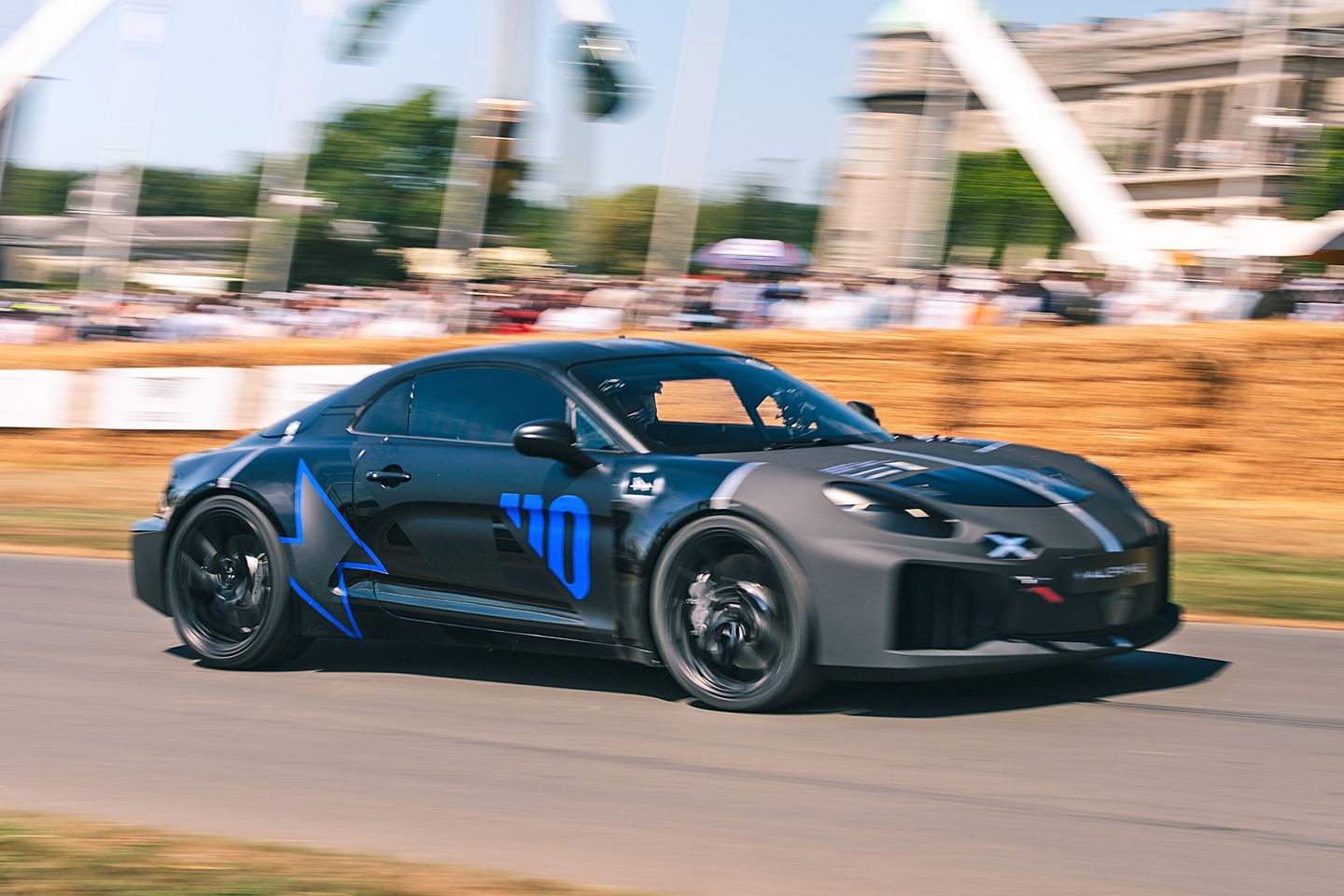
That said, the electric car - previewed by the A110 Future Concept at Goodwood - will remain the focus of the A110 range no matter the ICE decision. Krief has previously hinted at the performance potential of the EV by revealing that the Ferrari 488 GTB was being used as a benchmark. But he goes further at the Festival of Speed by explaining that the twin electric motor rear axle setup of the A390 provides a good illustration of how the A110 will put down its power. With an 800-volt cell-to-pack battery the system will have torque vectoring to create a limited-slip differential-like delivery of torque to the tarmac.
He reckons that “the size of the battery will enable at least 20 minutes of track time at maximum speed”, which is “at least as good as the [current] A110 petrol”, when you factor in that tyres and brakes need cooling after that time. The EV shouldn’t be drastically tougher on those, by the way, thanks to a circa 1.4-tonne kerbweight, which yes, would make it about 300kg heavier than the outgoing car, but only then about the same weight as a petrol Porsche Cayman.
Unlike Porsche, however, Alpine is not about to U-turn on its claims that fake gear shifts and paddles aren’t necessary in electric sports cars; Krief maintains his belief that EVs should embrace their character rather than emulate that of petrol-powered machinery. But he does (rejoice) at least agree that interiors should include other manual controls, like those for essential driving systems and climate control.
“You have to have your eyes on the road and your hands on the steering wheel,” he explains. “So in the A110 we want an integration between physical and digital. Digital stuff on the steering wheel doesn’t work - I want something timeless and intuitive where the driver can keep their hands on the wheel.”
Interestingly, later in the day PH spoke to Renault’s head of design, Alexandre Malval, and he suggested that the manufacturer will embrace digital technology more. It sounds like cockpit design will therefore be an area of growing divergence between the group’s mainstream and sporting firms - something we’d welcome, especially given how Scenic-like the A390’s cabin feels, which doesn’t help its battle with premium alternatives like the Porsche Macan EV.
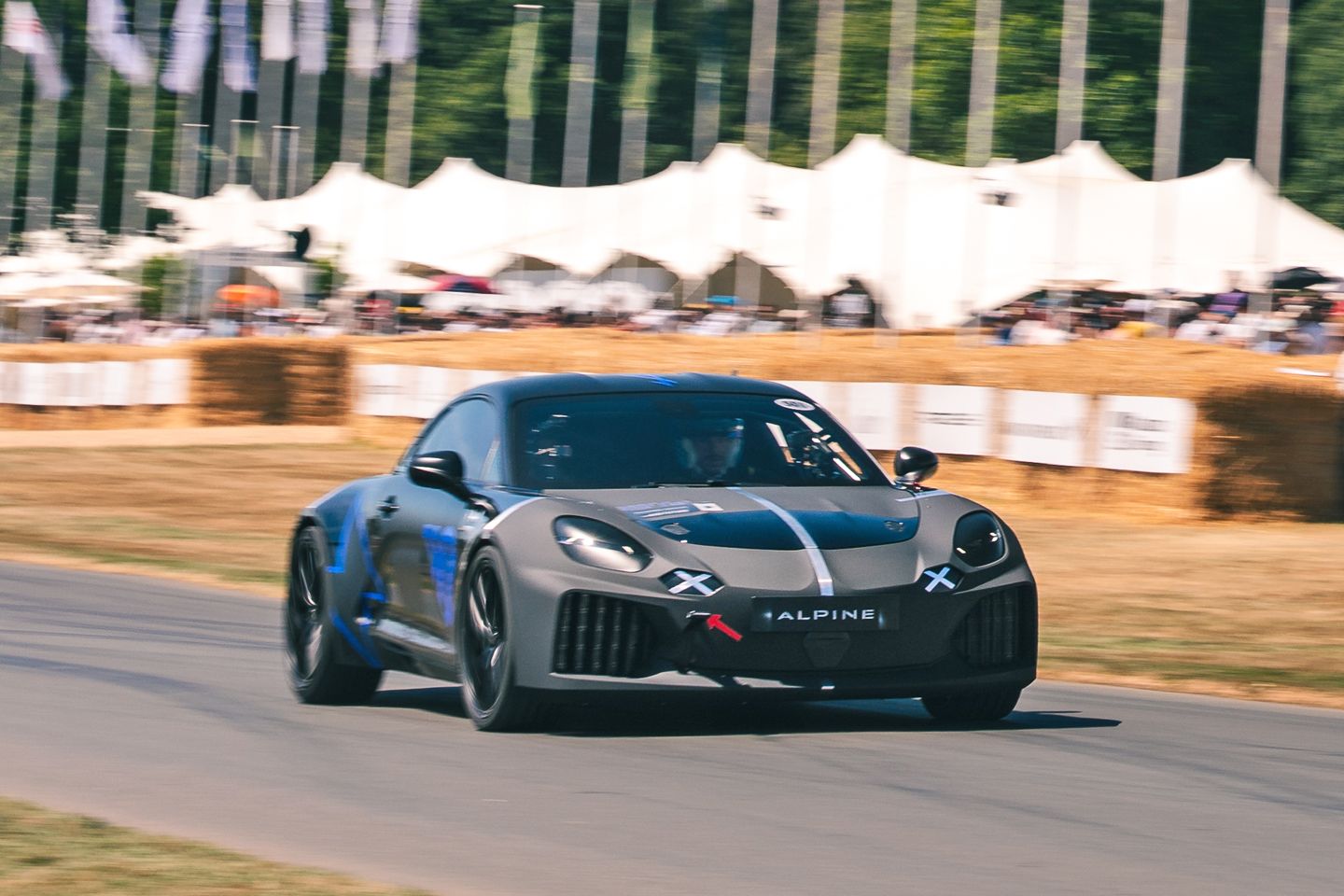
By the way, whether it remains EV-only or not, Alpine’s APP platform is intended to survive two generations of the A110 family, with 2+2 and convertible versions planned. But most exciting is Krief’s hint of a “special edition” that could see the base turned up to maximum performance potential, meaning we could be given an Alpine take on the 555hp Renault 5 Turbo 3E. That’ll please EV fans.
For everyone else, the growing prospect of a petrol-powered A110 successor means the current car’s lineage won’t come to a screeching halt. But solutions to the challenges of a) pricing and b) what would actually power the thing remain unclear. One thing is clear, though: while SUV sales would obviously be the key driver of sales in the US, if Alpine wants to be regarded as a successful sports car maker in America, it can’t only sell EVs. Just ask Porsche.


Alpine would have to produce to the US regulations, spin up a retailer network and be prepared to spend on marketing in a way they've been hesitant to do so elsewhere. Renault Group doesn't have that kind of cash.
ICE Alpine A110 will happen I'm sure, but it will still be heavier because of a) almost inevitable hybridisation and b) the removal of the exemptions (particularly safety) the old car got.

No petrol A110
and
We might consider it in a couple of years
IMO they should make it one or the other. Making it both will make at least one, probably both, mediocre at best.
AMG gradually diluting the 6.2 V8 into a farty 4-pot, yes I understand and empathise with the cause.. But not in this instance.
So far no EV sports car has been a success. But how many have there been? Sportscar, not super or hyper.
Except for really high end stuff, the drivetrain just doesn't seem to be viewed as a worth focussing on thees days, as long as the numbers are good enough. Even Porsche sell more four-pots than six-pots these days (I think).
" The smallest production V6 engine ever made is the Mitsubishi 6A10. It has a displacement of just 1.6 Litres (1597 cc). Mitsubishi built this tiny engine in the 1990s to help Japanese drivers pay lower road taxes based on engine size. Despite its small size, it was a smooth, high-revving engine that produced 138 horsepower.
The second smallest production V6 is the Mazda K8, which was a 1.8 Litre engine featured in the Mazda MX-3 sports coupe."
Gassing Station | General Gassing | Top of Page | What's New | My Stuff