
Nissan Skyline GT-R | PH Used Buying Guide
The forgotten generation of GT-R is on its way to bonafide classic - here's how to get the best
Key considerations
- Available for £30,000
- 2.6-litre straight-six petrol twin-turbo, all-wheel drive
- Didn’t excite as much as the R32…
- …but American import regs are being relaxed, driving up values
- Look hard for rust
- Great online community and knowledge on tap
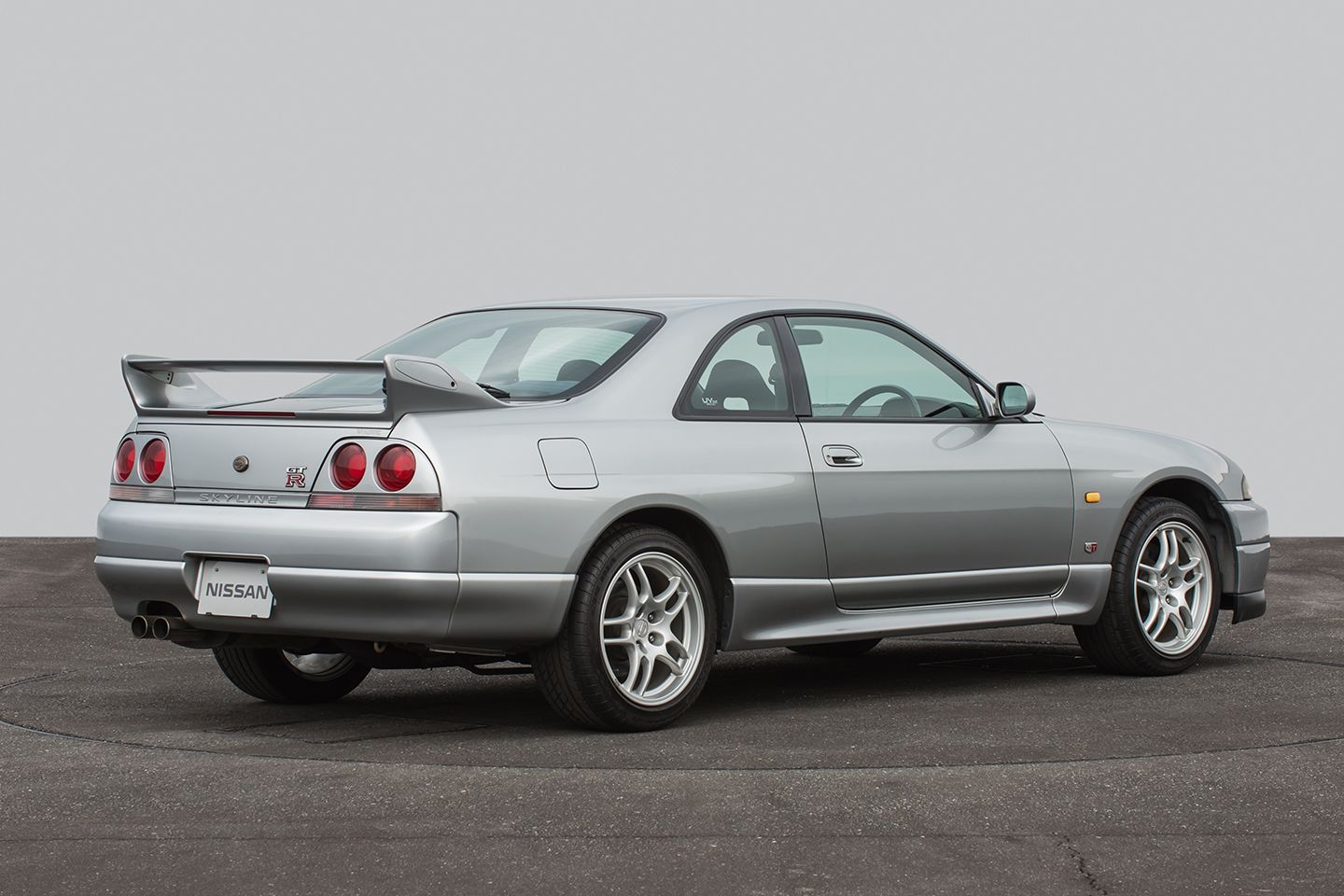
Introduced at the 1993 Tokyo show, two years before going into production, the R33 Nissan Skyline GT-R had a tough act to follow, namely the raw-edged (and much loved for that) R32. A change in the regs for Group A racing in which the R32 had been stomping the opposition pulled the rug out from under the more luxurious and 100kg heavier R33, denying it the chance to establish its own racing heritage.
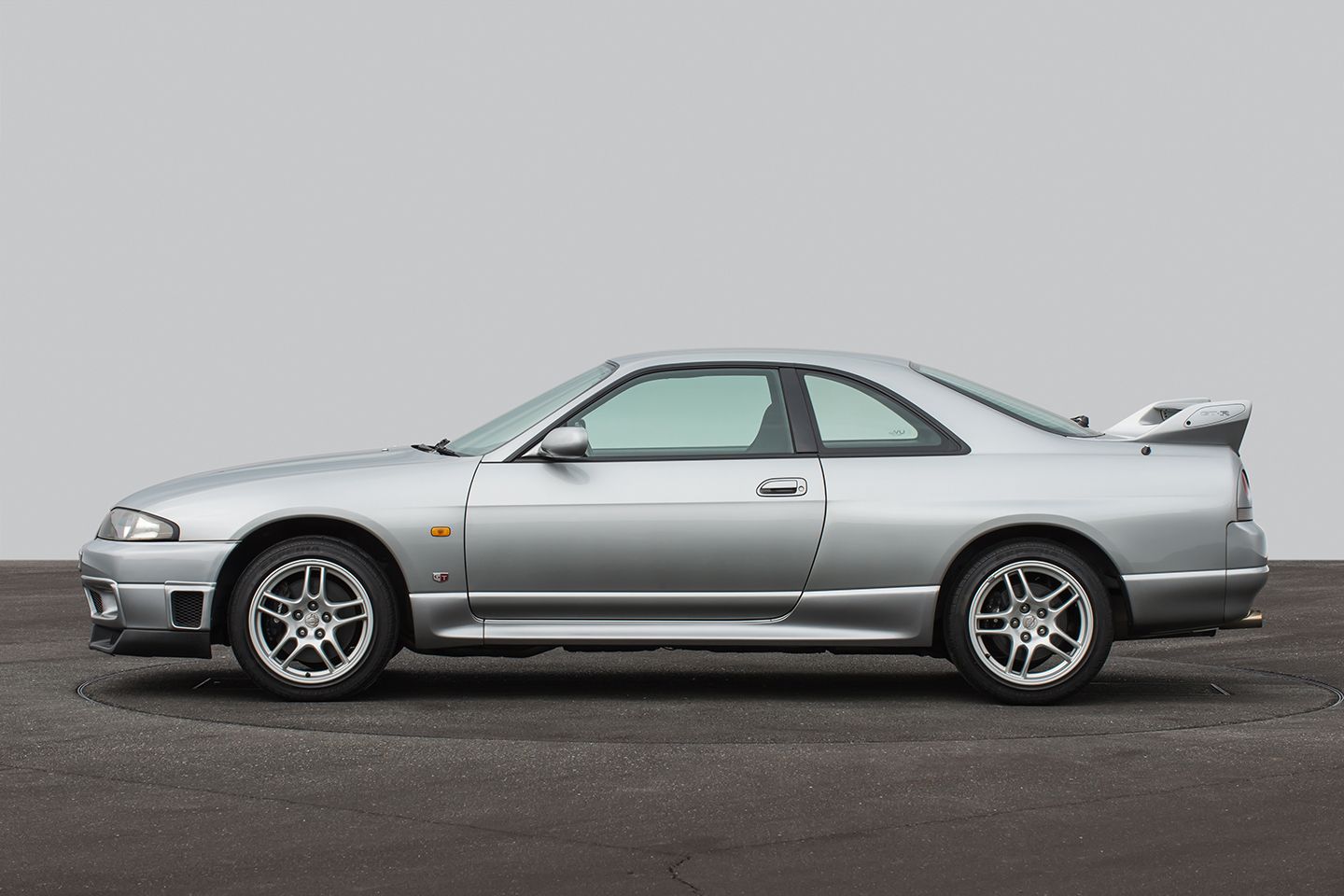
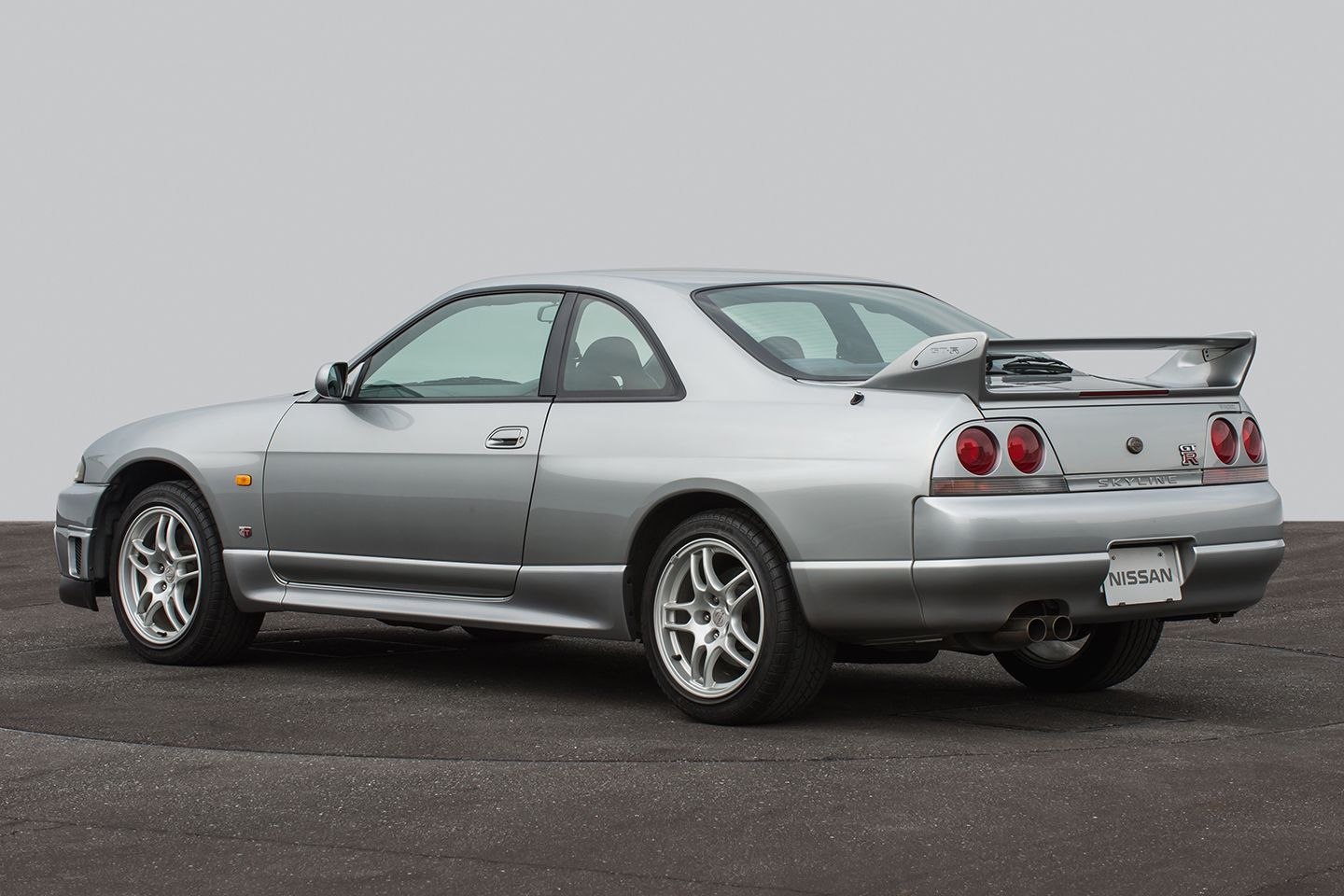
In reality, despite all the groaning about the new car's 'softness', the R33 GT-R was quite a lot quicker around a circuit than its predecessor. 21 seconds quicker at the ‘ring, to be precise, professional wheelman Dirk Schoysman bullying a V-Spec around in a whisker under eight minutes. Some of the R33’s superior track performance was down to superior aerodynamics – a new body kit reduced the car’s drag coefficient from 0.40 to 0.35 – but there were other differences. Of the three modern-day GT-Rs – R32, R33 and R34 – the R33 had the longest wheelbase. Its body was stiffer than the R32's thanks to stronger sills, body braces front and rear, and a new strengthening panel behind the rear seats. Brakes were larger at 324/300mm front/back compared to 296/297 on the R32. Tyres and wheels were bigger too, while the suspension was an evolution of the R32's multi-link arrangement. The R32's Super HICAS rear-wheel steering system was retained, but in the R33 it ran on electricity rather than hydraulic fluid.
The two 'main' R33 versions were the 1995-on GT-R and the 1997-on Series 3 V-Spec (or, popularly, Spec V), which stood for Victory Specification in reference to that car's upgrades that had brought so many Group N and Group A race victories. Nissan made three series of the GT-R and V-Spec, each series producing fewer cars than the one before.
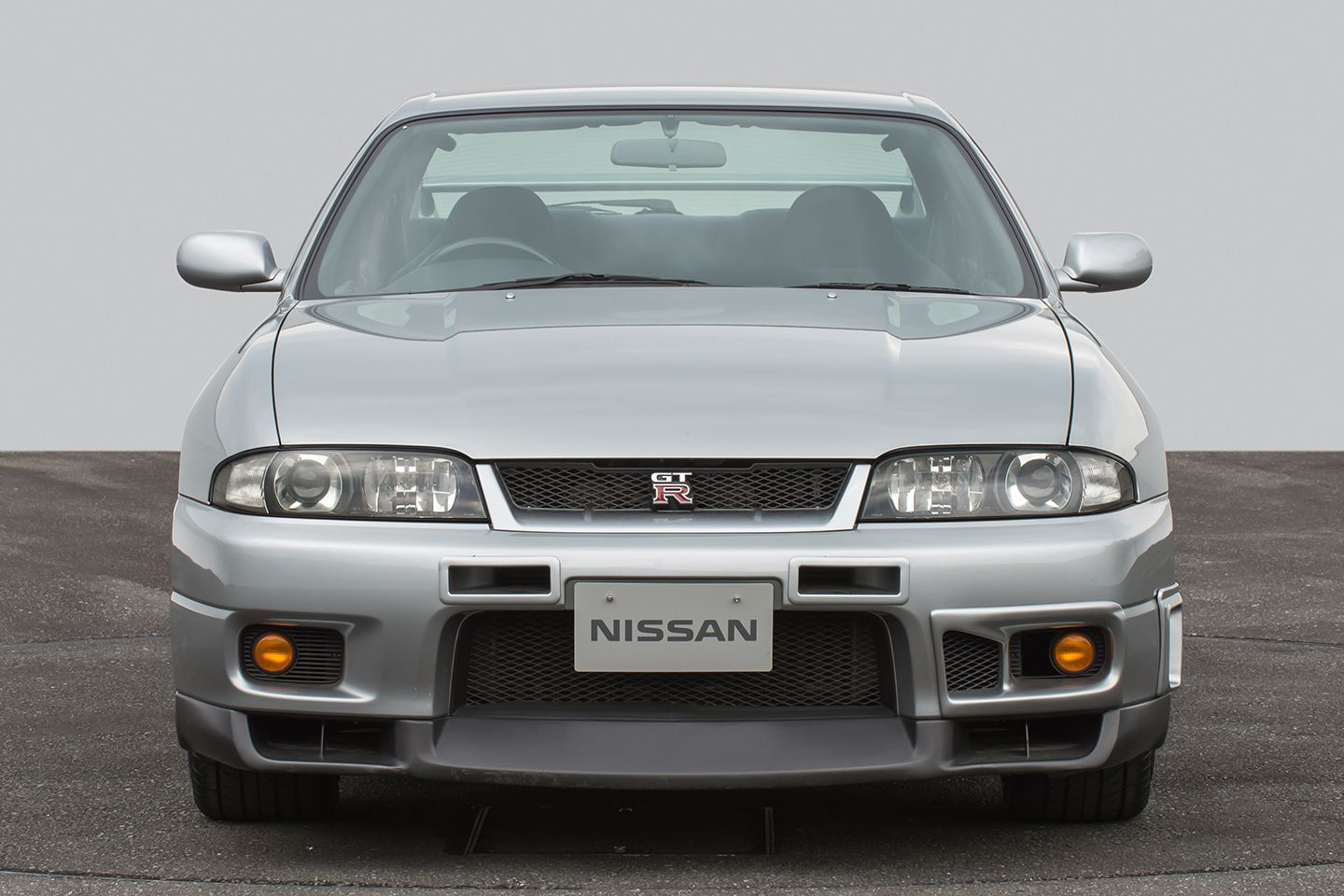
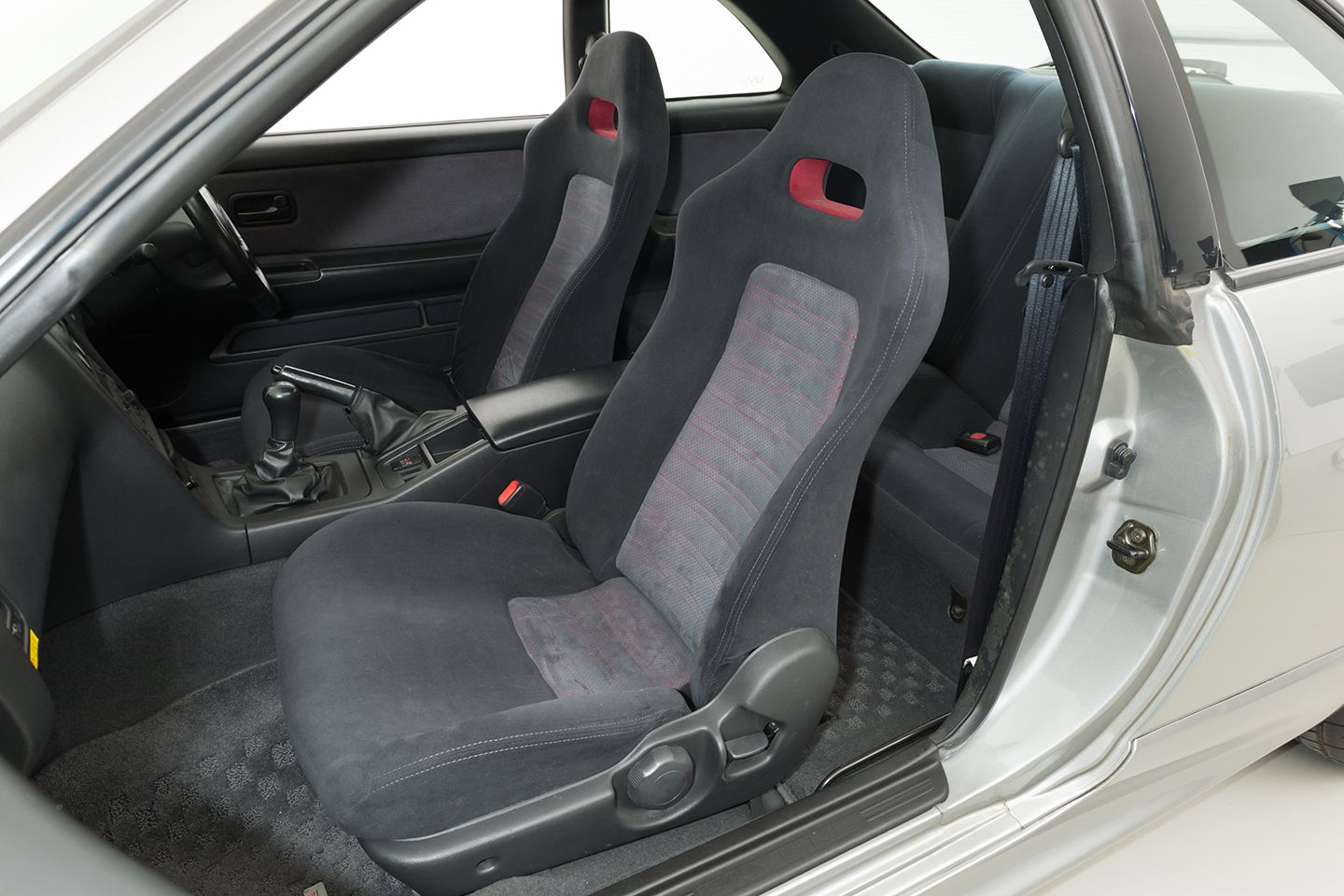
The R33 project came to a close with the 1997/98 Series 3 which had a larger front spoiler, single fog and reversing lights, and new oil coolers for the engine, gearbox and diff. This Series 3 V-Spec R33 was the first GT-R to be officially imported into the UK, one hundred of them being sold by a single authorised dealer, Middlehurst Nissan in St Helens. Around twenty of the hundred cars had leather interiors. The V-Spec had the 'Pro' version of the GT-R's clever ATTESA E-TS all-wheel drive system in which an active limited-slip differential at the back progressively locked under throttle, working with an intelligent centre diff that supplied more power to whichever end of the car had the best grip. The V-Spec also had stiffer, lowered suspension, sports seats, lightweight BBS 17-inch wheels and an aluminium bonnet.
There was also an N1 version of the R33 V-Spec that, as with the R32 equivalent, stripped stuff out of the car – air-con, audio, boot carpet, rear wiper - to make it competitively light for the Japanese domestic racing scene. Nissan made 86 of those. Or you could import a single-turbo GTST model with a 2.5-litre engine generating 250hp in standard trim. Privately-owned examples of those start at £14k-£15k, but it's the big dog GT-R we're looking at here. Its 2.6 litre straight six RB26DETT engine used two turbos to achieve what now seems like a meh sort of output (280hp), but don’t be fooled. A gentleman's agreement in force between Japanese car manufacturers in the mid-1990s was stretched every which way by all involved. By common consent the GT-R's true power output was nearer to 300hp than 280hp and it went much further than that. Some say that late V-Specs were approaching 400hp. Nissan always maintained that it was sticking to the agreement, lifting torque rather than horsepower and concentrating on keeping that torque going to a higher point in the rev range. Whatever, everybody knew that the RB26 was robust enough not only to let enthusiast owners and tuners push the boat out, but also to shove it over Niagara Falls with a rocket attached to the back of it. And that's exactly what many of them did.
The rarest R33 was the LM, much beloved by Gran Turismo fans. This one-off, aeroed-up rear-wheel drive homologation model had fully adjustable double-wishbone suspension in place of the standard multilink setup. Somewhat more accessible was the LM Limited special edition, 188 of which were built in 1996 (86 regular spec cars, 102 V-Spec) for the Japanese market to commemorate Nissan's dip into Le Mans endurance racing. These had bonnet and front bumper air ducts from the N1, a carbon fibre rear spoiler, a special badge, and an exclusive Champion Blue paint scheme. Nissan even made a 4-door GT-R, the Skyline GT-R Autech Version 40th anniversary. Built by Nissan subsidiary Autech, this was launched at the 1997 Tokyo show for sale in 1998. 400 were supposed to be built, but it's thought that 416 were made.
There were a few special editions, the most notable being the 1997MY-on Nismo 400R, which was basically a roadgoing version of the GT-R Le Mans car. Its REINIK-assembled high-boost, bored and stroked (77.7 x 87mm versus 73.7 x 86mm) RBX-GT2 2.8 engine with forged crank, pistons and rods, reinforced block, pointier cams and new intercooler put out just under 400hp and 350lb ft. The gearbox was a motorsport-spec Getrag item and the propshaft was carbon fibre. Cylinder head ports were polished and there was a big-manifold exhaust (titanium from the cats back). On the chassis side it had a 50mm wider track, Bilstein dampers, stiffer bushing and springs, a 30mm ride height drop, carbon bonnet and rear wing, titanium strut brace and forged three-piece alloy wheels. The upshot of all that was a 186mph top speed and a 0-60mph time of 4.0 seconds. Unofficially, 99 NISMOs were planned. Officially, 44 were sold. Used ones are very expensive, as we’ll get into in a minute.
R33 production finished in November 1998. The R34 that followed it in 1999 turned out to be a bit of a techfest. This didn't endear it to those who remembered the more organic R32, but the proof was in the eating: by 2016, R34 Z-Tune values had climbed to £500,000. The R33 GT-R was relatively unloved to start with. In 2010 you could easily find a privately owned, lightly modded 70,000-miler for £8k. By 2018 you needed £15k for a ropey one. A good one then would have been £25k and an excellent one £30k.
Today (mid 2023) £30k is the starting price for base model R33 GT-Rs. The upper end is – well, think of a number. One car in PH Classifieds at the time of writing, a one-owner LM Limited with 25,000 miles, was tagged at £185,000. Whether it will sell at that price is anyone's guess, but the fact is that even mid-mileage (50-70,000) R33 GT-Rs are currently running at between £50k and £75k depending on the state of tune. The NISMO 400R is on another level again. In early 2022 Matt wrote this piece about one of the last 400Rs to come off the line. This '99MY car built in 1998 had 38,000 miles on the clock and UK vendors Harlow Jap Autos were asking £1.6m for it. Yep, you read that right. PHers tracked down its provenance and found that it had been brought into the UK from the US in 2015 for $85,000. It has just (May '23) been sold at auction. The winning bid was £701,400.
Before you shriek in outrage at these numbers you should be aware of the fact that the R33 recently became a legal import for previously deprived American enthusiasts under that country’s 25-year rule. This has certainly had an effect on Stateside R33 values. In late 2021 Hagerty was valuing concours NISMO 400Rs at $1.5 million. By early 2022 they had changed that to $2 million, so even at £700k the buyer of that £700k NISMO still stands to make a lot of money out of it from January '24 when the 25-year rule comes into play.
Doubtless, there will be a few PHers reading this who missed out on buying an R33 at considerably smaller figures than the ones that we've just been bandying around, or who had one and sold it for a considerably smaller amount. Ach well, what can you do? Long and short of it is, these are no longer cheap cars.
Are they worth these lofty prices, though? If you're a GT-R fan then the answer will always be yes, and in the pantheon of classic GT-Rs the R33 could be said to represent especially good value if you buy wisely and well and expect it to rise, which given what we’ve just said about US imports is a reasonable expectation. The R33 doesn't have quite the motorsports heritage of the R32, but the PlayStation connection gave it a different sort of credibility.
SPECIFICATION | NISSAN SKYLINE GT-R R33 (1995-98)
Engine: 2,568cc straight-six twin-turbo petrol
Transmission: 5-speed manual, all-wheel drive
Power (hp): 280@6,800rpm
Torque (lb ft): 271@4,400rpm
0-62mph (secs): 5.4
Top speed (mph): 155
Weight (kg): 1,530
MPG (official combined): 24.9
Wheels (in): 9 x 17
Tyres: 245/45
On sale: 1995 - 1998
Price new: £50,000
Price now: from £30,000
Note for reference: car weight and power data are hard to pin down with absolute certainty. For consistency, we use the same source for all our guides. We hope the data we use is right more often than it’s wrong. Our advice is to treat it as relative rather than definitive.
ENGINE & GEARBOX
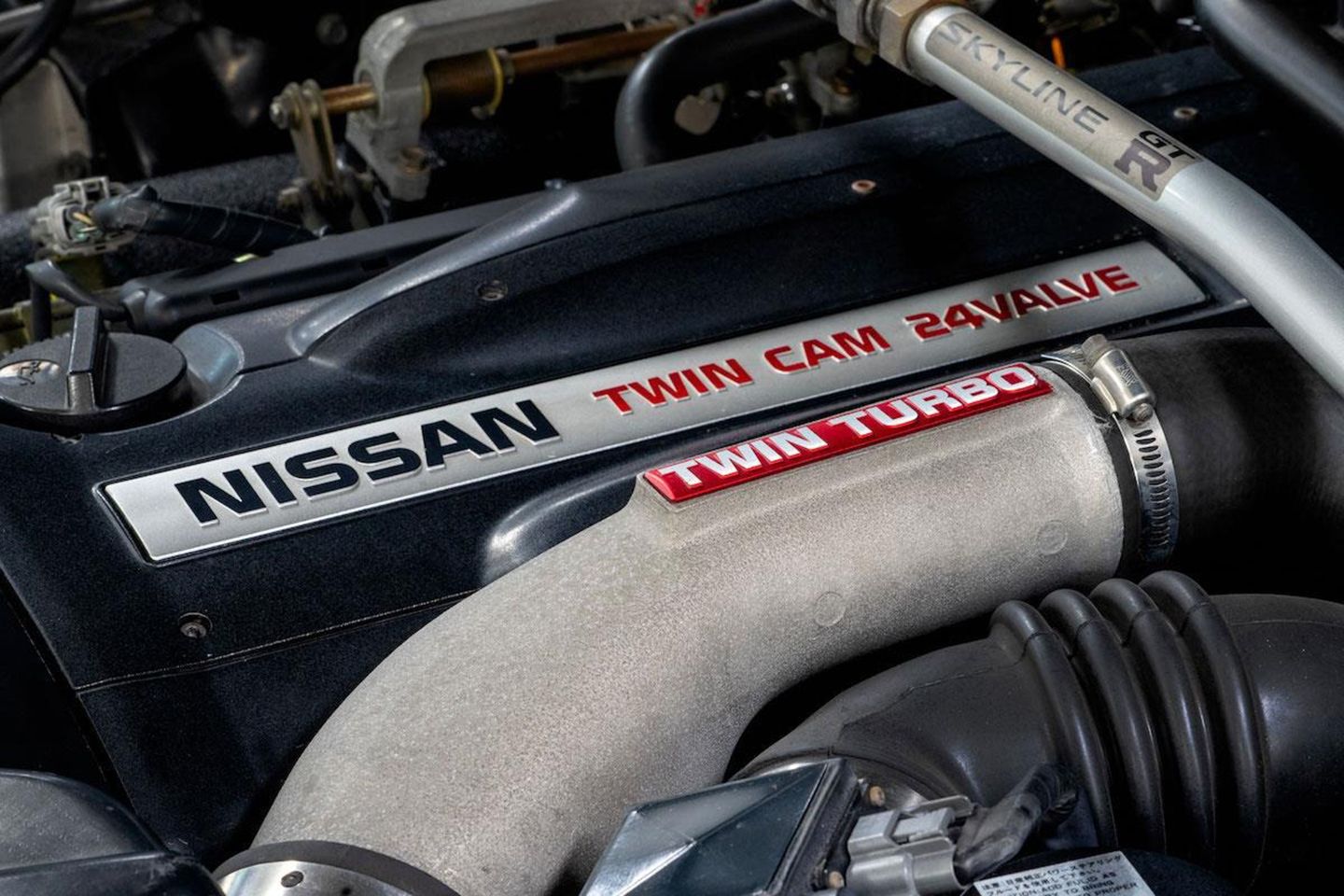
The twin-turbocharged RB26DETT straight six is undoubtedly one of the all-time great powerplants. Immensely durable and tuneable, it drove not only the R33 of the mid-1990s but also the 1989 R32 before it and the 1999 R34 after it, a big vote of confidence by Nissan in the long-term integrity of the powertrain's design and build strength. In case you're wondering, the ’26’ in RB26DETT refers to the displacement (2.6 litres), D is for dual overhead cams, E is for electronic fuel injection and TT is for twin turbos. Some said that RB stood for ‘racing breed’ but there's no evidence to turn that urban myth into fact.
We're not going to get into the detail of tuning here because that's a huge story in its own right. Just to say that if you favoured the old-fashioned route of overbores, hot cams, cam gear wheels, ported heads, higher compression ratios, big turbos and the like, the world was your lobster with the R33. Don't believe anyone who says that chipping alone will deliver 500hp. The injectors won't be able to keep up. Multiplying the standard power by three without fearing for either driveability or longevity was perfectly feasible, however. 1000hp on the stock bottom end was possible, although at those levels the ring land on number six cylinder would almost certainly pop sooner rather than later.
From a buying point of view, you need to have your bodgery radar knob set to 11 when searching out a car because very few owners managed to resist the temptation to tune, and not always in the best way. Bog standard cars are now highly sought after because they offer an unmolested platform for, er, tuning. RB26s do have that excellent reputation for strength, but even the strongest engine won't take abuse without maintenance. The RB is no exception. They need their oil changing at least every 6,000 miles, and then only with good quality stuff. Insist on any car you're going to look at being left cold before your arrival so that you can listen out for any cold-start knocking. Once the engine is warmed up, remove the breather pipe between the cam covers, smashing the protesting owner out of the way while doing so, to check for excess amounts of oil mist.
Ramping up turbo boost for extra power sounds like a great plan, but increased crankcase pressure can lead to oil being forced past the turbo and into the intake tract, increasing oil consumption, creating exhaust smoke on boost and potentially causing detonation. 14psi, or about 1 bar, is considered the safe limit if your car's turbo has ceramic exhaust wheels (see below). Too much oil in the cylinder head starves the sump, leading to spinning bearings and engine failure. These problems were better known on R32s than R33s, which had better oil pump drives on their cranks, but it's still wise to be fully aware of the consequences of tuning.
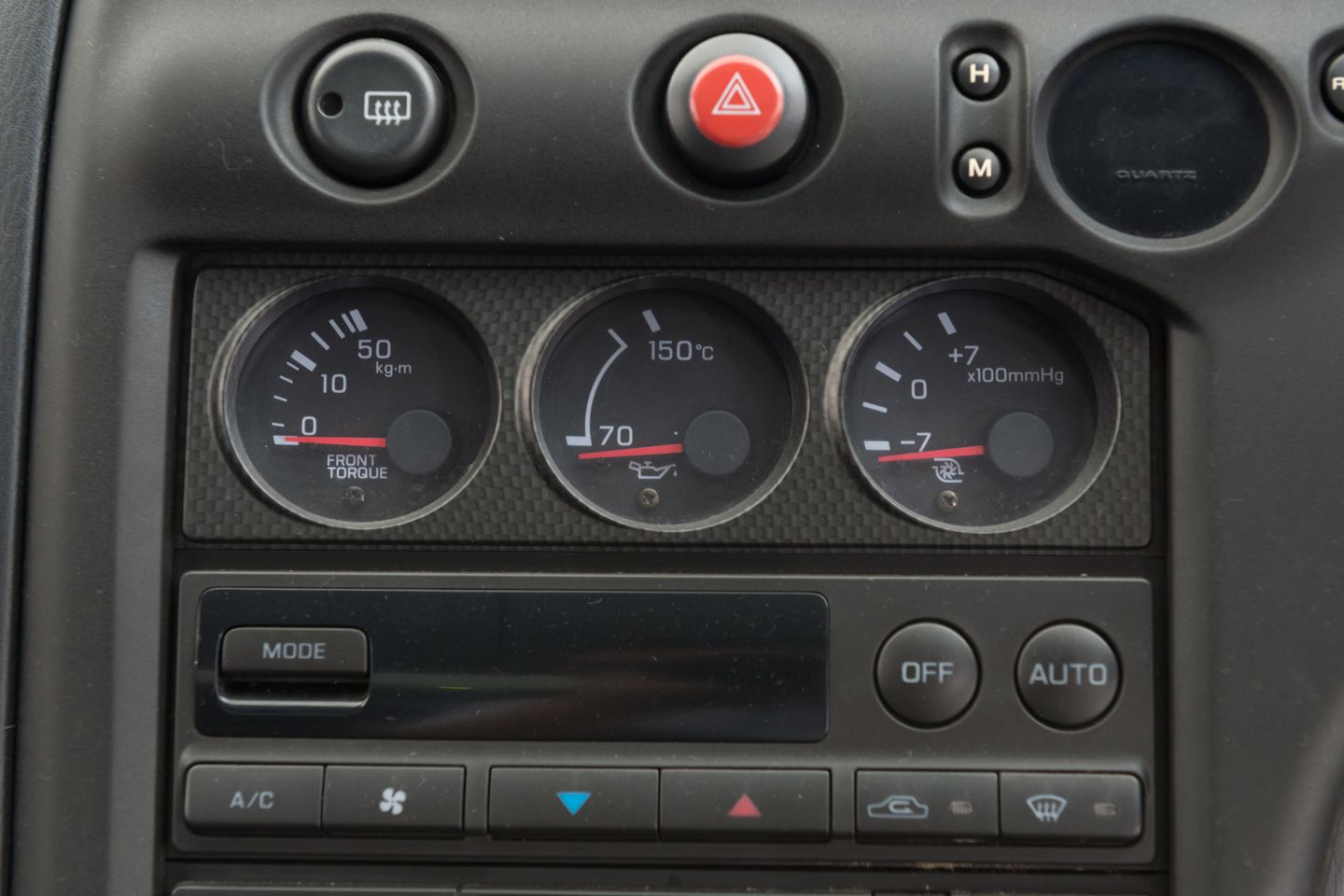
RB26 cylinder blocks can crack. The coolant system needs ongoing monitoring for blockages which can cause dangerous overheating. High oil pressure at 4,000rpm is an indicator that all is not well. Noisy turbo operation suggests worn bearings. The turbine blades on the R33 were less fragile than those on the R32, but no turbo will take limitless boost without breaking. The RB26 used a ceramic exhaust wheel to reduce inertia and increase the turbocharger's heat capacity, but overspinning the turbo (or detonation) would ping the wheel off its shaft.
Fuelling is key if you want to go really fast in a GT-R. Fitting big pumps, fuel rails and high-flow filters will take you there. The official combined consumption of the standard car was a chin-stroking 34.9mpg but they will actually do those sorts of numbers if you drive gently. Even tuned cars will give you low to mid-20s in the right environment. Driven with more gusto you’ll be in the 16-17mpg range. Misfires can be a problem. Depending on whether it's hot or cold, spark plugs, coil packs or airflow meters can all have a say in this. This is another reason to insist on a cold engine on any car you're looking at. Poor starting and hunting at idle from 1,200-1,600rpm could be a vacuum leak, a fritzing AAC (idle control valve), a leaking inlet gasket or just old fuel in the tank. Engine belts should be changed every 60,000 miles. Underbonnet wiring can get crispy with age and heat.
R33 electrics aren't as whizzy as they are on the R34, but they're old now and vulnerable. The solder joints on things like MAFs dry out. Make sure the AWD system is working by giving it a decent bootful on a wet road. That should trigger some drive action at the front wheels. If you can't feel any difference, get your mate to stand by and watch. There shouldn't be any untoward noises from the rear diff.
The gearbox, a beefy five-speeder that was carried over from the R32, was rarely fazed even by heavily tuned GT-R engines. The action was clean and satisfying. If you were going really large on power, somebody like Quaife would sell you a straight cut six-speed dog box for £6k or so. There's a dual mass flywheel in the standard trans which can seem noisy when the car is stationary with no gears engaged, but that's not a massive worry in itself. More troubling would be grinding when changing up and down through the box because that will almost certainly be the synchros wearing out. Graunchy changes between first and second and fourth and fifth are the giveaway there.
On any car you end up buying it's worth changing all the oils just to be on the safe side, including the gearbox. Some owners use thicker trans fluid than the factory-recommended stuff in the hope that it reduces the tendency to graunch. Having said that, the box in the Series 3 UK cars was stronger than earlier ones. The good news is that the switched-on RB26 community has devised smart ways to get around just about every possible problem, so in all but the most terminal situations you're unlikely to be left high and dry. Abbey Motorsport and Harlow Jap Autos have good reputations in the field.
CHASSIS
If you end up buying a standard R33 GT-R even though you would have preferred a V-Spec, you can easily upgrade it to something like that level. Quite a few cars on the used market will already have had coilover suspension fitted. Not all of these will be an improvement on the standard system, however. If the aftermarket units on a car you’re thinking of buying are adjustable, try and make use of that facility on your test drive to make sure that you can find an acceptable blend of ride comfort and grip.
Polybushing is obviously a thing on these cars. A full set should come in at under £600 and will noticeably tighten up a baggy chassis. Installing thicker anti-roll bars is another popular mod. Uprated 'Superlock' front and rear diffs from highly-rated Japanese specialists OS Giken will cost around £3k for the pair.
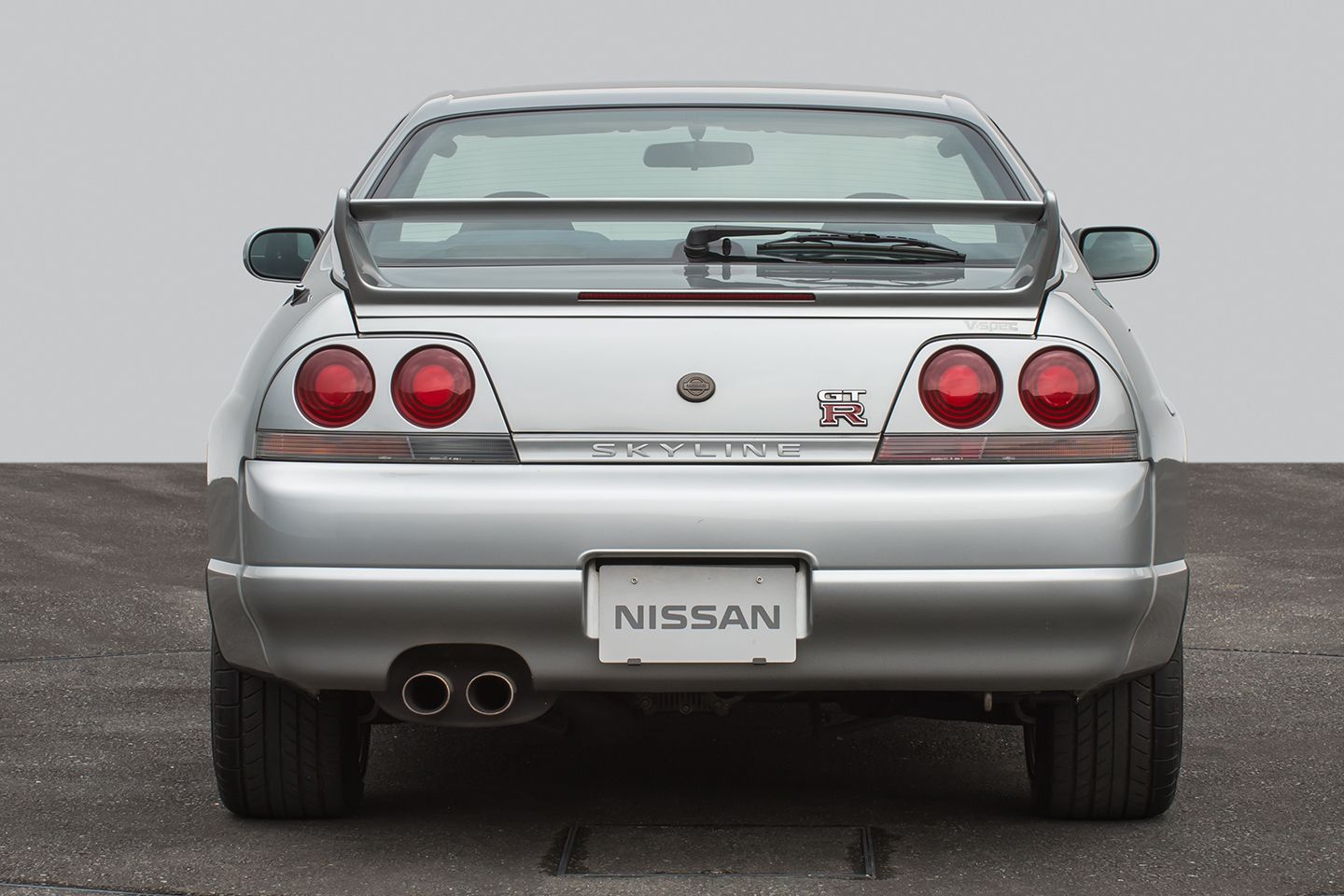
Steering racks leak. The HICAS rear-wheel steering is known for playing up. Again, the aftermarket has the solution in the form of HICAS elimination kits that substitute adjustable control arms for the HICAS componentry. There was no cabin switch to turn off the all-wheel drive, but you could achieve that by disconnecting a wire, pulling a fuse or wiring in your own switch. Running non-standard wheels and tyres would throw an ATESSA fault code.
Powered-up R33s should really have powered-up brakes. The standard Brembo brakes weren't that well-rated by those who were driving their R32s hard, and sometimes the discs would warp. Many cars will have had TAROX, Alcon, DBA or AP kits put on them. If the car you're thinking of buying doesn't have one of those, the costs involved are not as high on the R33 as they are for later GT-Rs.
Finding original 9x17 wheels on an R33 that’s for sale will be a rare occurrence because everyone wants to go Fast & Furious and the aftermarket choice is broad. You could go up to 19-inch wheels in the stock arches and, as you might expect, aftermarket bodywork options mean you don't have to retain those either. More important than visual appeal is ensuring that the wheels are all pointing in the right direction. Uneven tyre wear will tell you that it's time to get the geometry checked. That should be seen as a scheduled thing and not a one-off event. GT-R specialists will often include a geometry check in a regular service.
INTERIOR
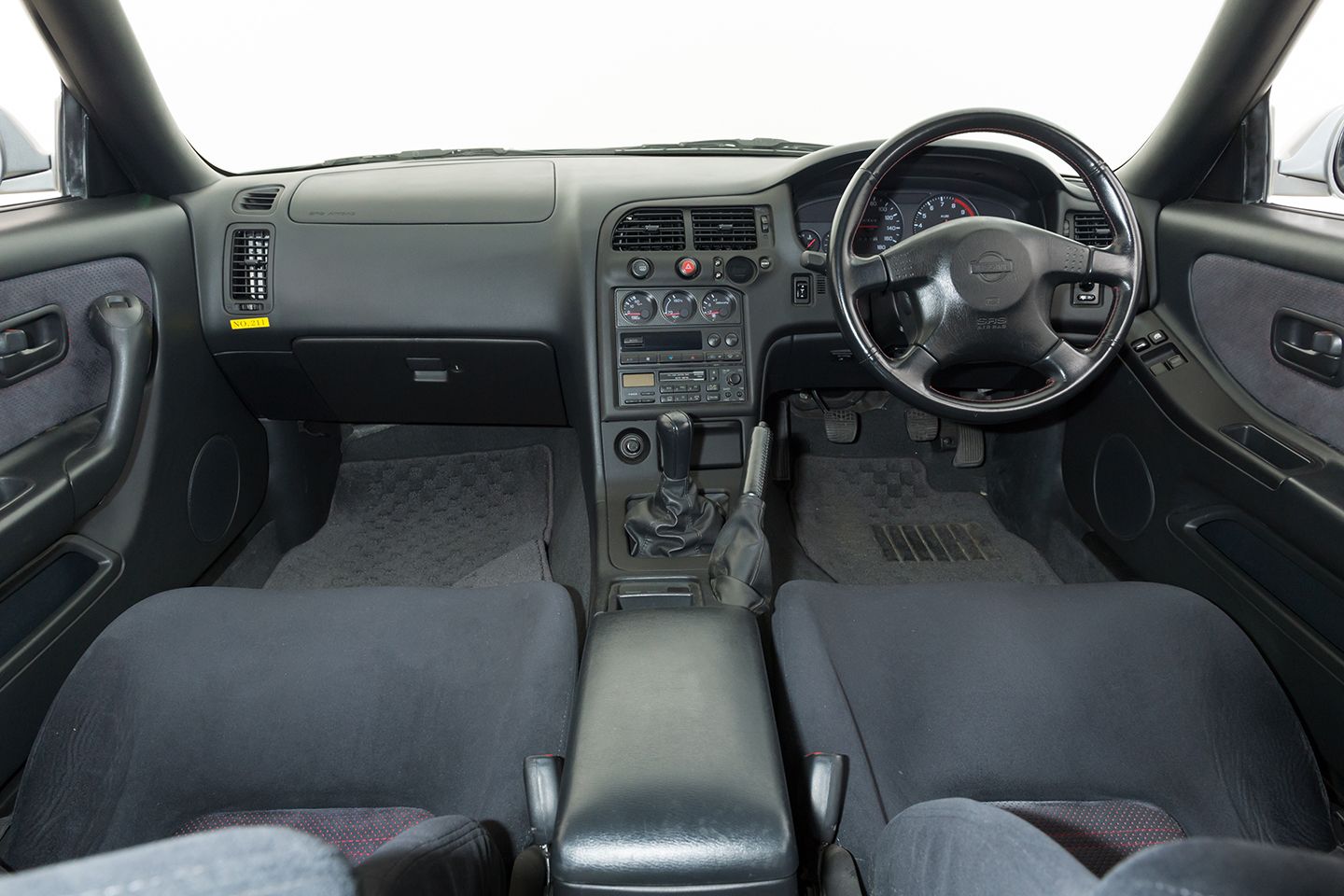
The R33 GT-R interior was basically the same as the Nissan Maxima's, i.e., not massively exciting, but it was a world away from the R32 in terms of up-to-date quality and modernity of feel. The cloth seats didn't look like the sort of thing Vin Diesel would have approved of, but they were very comfortable and supportive. One in five of the 100 UK R33 V-Specs had leather which was available as an extra for around £2,000. High-bolstered seats are always susceptible to damage and that's especially true on 20+ year old cars. Tracking down new cloth to patch up any holes isn't the work of a moment.
Age does have an enbrittling effect on wiring, so unless you're prepared to drive on a guesswork basis it's important to make sure that all the gauges work. Dashboards crack, too, especially on cars that have been used in warmer climates.
BODYWORK
R33s are 20th-century cars. Even the youngest ones are a quarter of a century old, so they're open to the corrosion problems that beset all old cars. Fresh imports from Japan tend to fare better than cars that have been dailied in Britain's climate for a few years. The suspension turrets in particular (which are double or maybe even triple-skinned, trapping water and leading to them rusting from the inside out) need to be checked, as does the complete underbody, the boot lid and the rear wheel arches.
Uneven body panel alignment means it's time to look up the car's accident record. Sills are often crushed by clumsy jacking or sudden contact with solid objects. Lacquer peel will very likely be an issue on the paintwork of cheaper R33s. Bootlid struts give up, window seals harden and let water in, and sunroofs leak. Water gets into the boot too via dodgy seals around the lid or the rear lights.
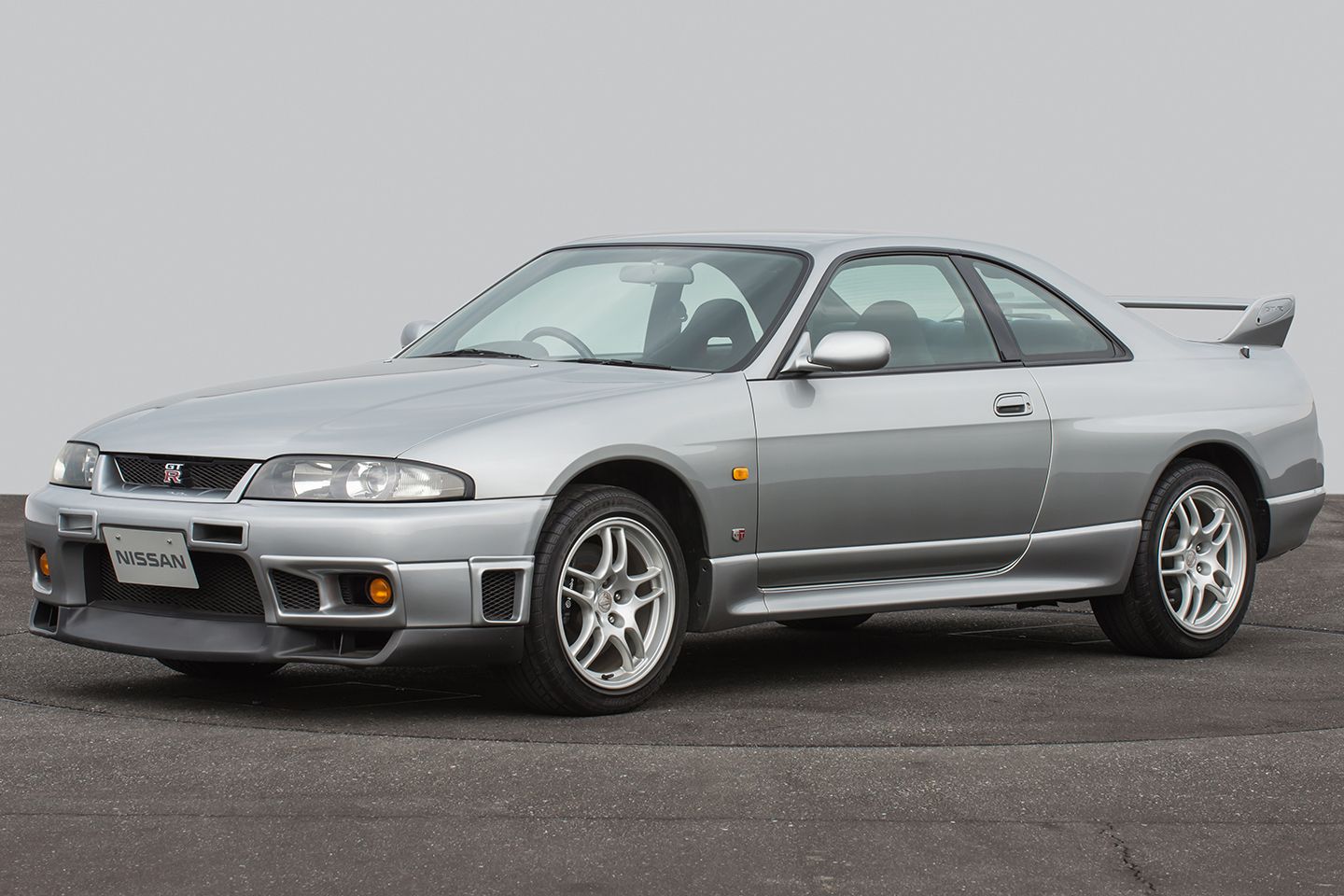
Because they had no automatic levelling or washing devices that were a legal requirement at the time, the Xenon lights that became standard on Series 3 GT-Rs were taken off the V-Spec cars that were destined for the UK. We seem to recall that you could have them put back on at the time. Rumour has it that all those Xenon lights that were taken off the cars were boxed up at Nissan's GB headquarters and later thrown away when the storage facility was relocated. Lens repair kits are available to fix broken or discoloured ones. Some owners with Xenons have fitted LED bulbs instead to avoid expense.
PH VERDICT
Fewer than 17,000 R33 GT-Rs were made. That's a small number for a company as big as Nissan. 1,270 series 3 V-Specs were built, from which 100 (or possibly 103) were officially imported into the UK. These are very small numbers indeed so it's reasonable to assume that prices for 'official' GT-Rs are only going to go one way, and that the prices of imports will be dragged up behind them.
Corrosion is the big killer, but given the values that are being attained by clean examples you might well think that there's still plenty of financial headroom in buying and restoring a rusty car. This business of the US market gradually opening up to previously illegal cars under the 25-year rule is key. For American buyers the UK is a very interesting source of GT-Rs. Final tip: not every 'upgrade' will be genuine. You'll need to have your wits about you. For an insight into GT-R ownership head over to gtr.co.uk or gtroc.co.uk.
So, what's available on PH classifieds? Well, the first thing to say is that there were no UK cars there at the time of writing. Availability is always going to be fluid, but you can give yourself a head start on tracking one down by asking the right questions on one of the two sites just mentioned. This '95 import was the most affordable R33 GT-R on PH at £39,995. Not exactly a low miler at 107k, but it is remarkably original and comes in the favoured colour of Midnight Purple.
HJA had a choice of two white imports at £59,995, one a Series 2 V-Spec with 75,000 miles and the other a Series 3 GT-R with Stage 1 mods and 68,000 miles. No NISMOs on PH at the moment, sadly, but we couldn't leave without showing you HJA's one Japanese owner LM Limited, 25,000 miles and very spangly. Mind you, so it should be at £185k.


- I was bit confused by reference to V-Spec from 1997. I may have misread sentence construction but I think there were V-Spec R33 pre 1997?
- the N1 car was quite a bit more special than just lighter weight (thinner paint as well as no air con etc has also been mentioned) and rarity (although both facts are true). I think there was a special strengthened engine block (the N24), special turbo chargers plus other engineering enhancements over the standard vehicle that allowed it to perform more reliably and better in the endurance races it was specifically built for. It was only built to special order (hence the rather random 86 produced) and its relatively “bespoke” nature meant it cost quite a bit more than a “normal” R33 GT-R new
I had a R32. I would not wish such a nightmarish piece of poo on anyone else.
Save your savings and sanity and make a friend with one and borrow it every now and then instead. And if they try to confide in you about what it's doing to them, change the subject.
Just a shame the prices are going crazy, even for the lower spec models. I often thought about buying a GTS-T for a toy, but I think that time has passed, as I can't stomach paying 10k+ for one after seeing them for half that for so many years.
 Me too !!
At £30k+ I can't see me ever owning one now. Might have to settle for a GTS25T

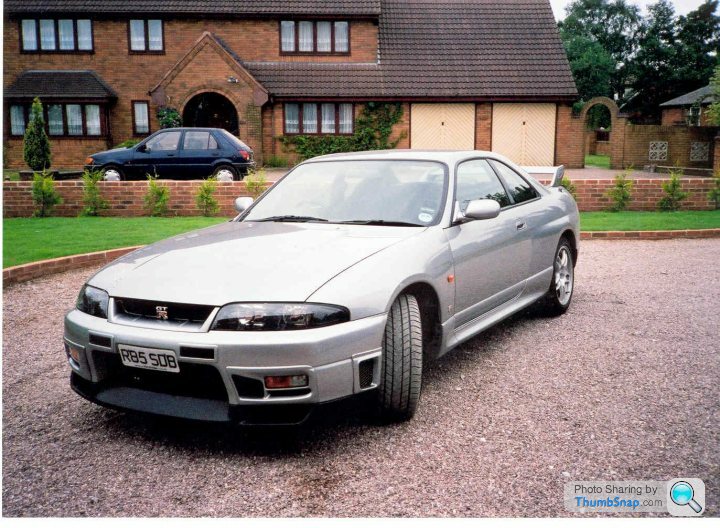


This was the first ever episode of Top Gear I ever watched. I recorded it on VCR and watched it so many times I memorised the words to the whole thing.
As a 10 year old boy, THIS car made a HUGE impression on me.
What a car.
Enjoy
https://youtu.be/jfmkcTxl0ww
Forums | General Gassing | Top of Page | What's New | My Stuff