
Boxing clever at 25 | PH Footnote
The do-it-all Skoda Octavia wagon has now been with us for as long as there's been a PH. Czech mate
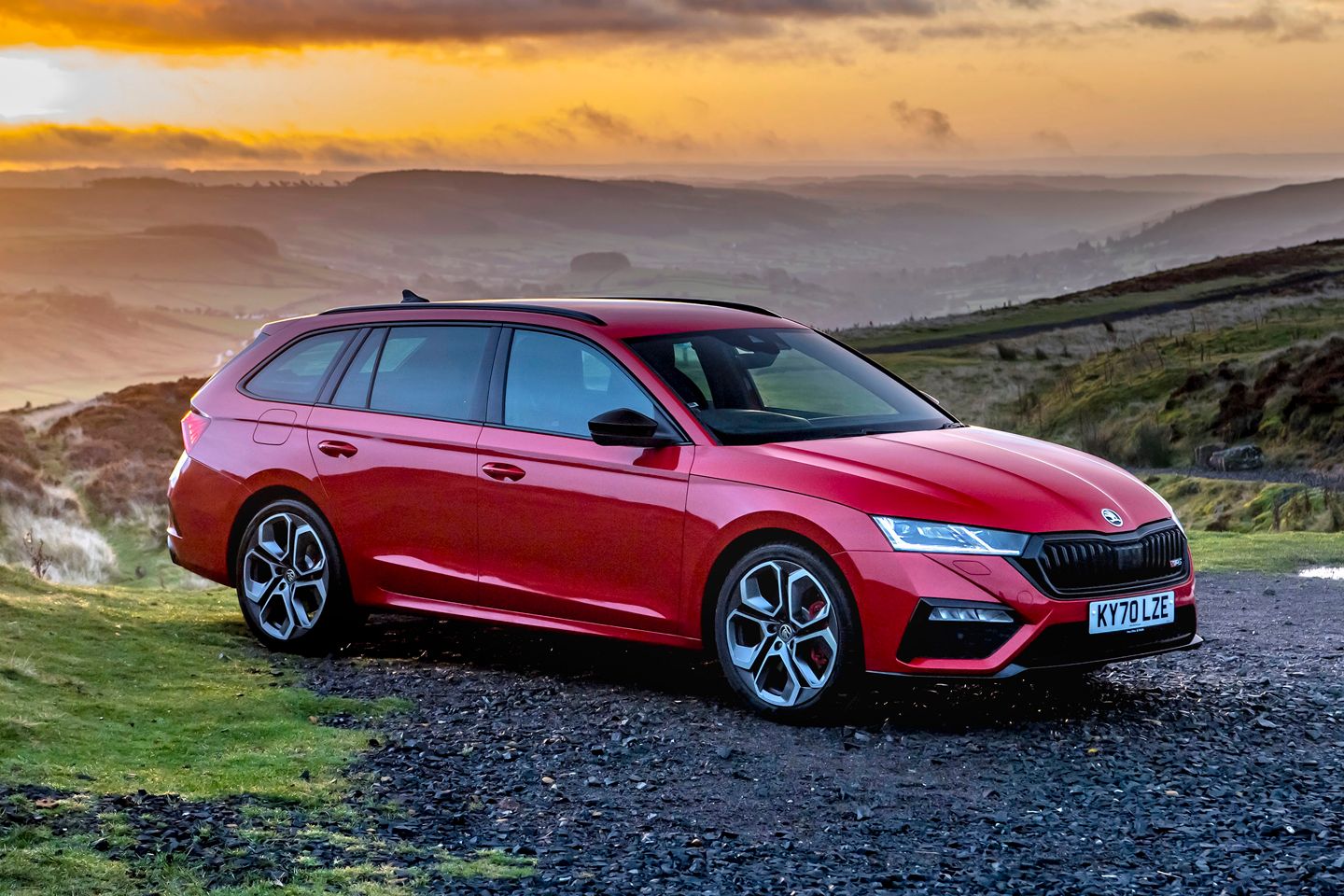
Is there a better match made in heaven than the Skoda Octavia and a wagon-shaped backend? Sure, the model launched as a segment-splicing five-door liftback and is arguably more famous in that format, but if you were trying to characterise the car’s spirit or boil it down to its ’Simply Clever’ essence, it would surely be as the estate version that went into production swiftly after the Octavia launched in 1996. The Mk1 reached British shelves in 1998 - which means we’ve enjoyed 25 years and four generations of rampant functionality. And been glad of it.
Skoda knows all too well that it has the Octavia to thank for the generally enviable way it is regarded today (unarguably among the great resuscitations of any brand in modern times). Yes, the Felicia preceded it and the Fabia initially outsold it, but the second generation Octavia, launched in 2004, caught people’s imagination almost immediately. Two years later, it was Skoda’s best-selling car globally - a position it has never relinquished despite the manufacturer introducing what seems like 45 iterations of compact SUV in the last few years. Skoda declared the wagon a ‘perennial bestseller’ in the UK when it marked its 25th anniversary (since the original concept was revealed) just last year.
Much like the VW Golf or the BMW 3 Series, the long-running Octavia has become so intertwined with a wider perception of the brand that it seems hard to imagine it ever falling by the wayside. But the ceaseless shift toward electrification means the car’s position as Skoda’s tentpole is no longer set in stone. Much like the Golf and 3 Series, it is now beset on all sides by newer, funkier (typically stupider) EV models as its manufacturer sets out what it hopes will be an enticing stall for a coming generation of buyers. Much like the Golf and 3 Series, the Octavia has already been turned into a plug-in hybrid in its current format - who knows what Skoda has in store for the nameplate after that.
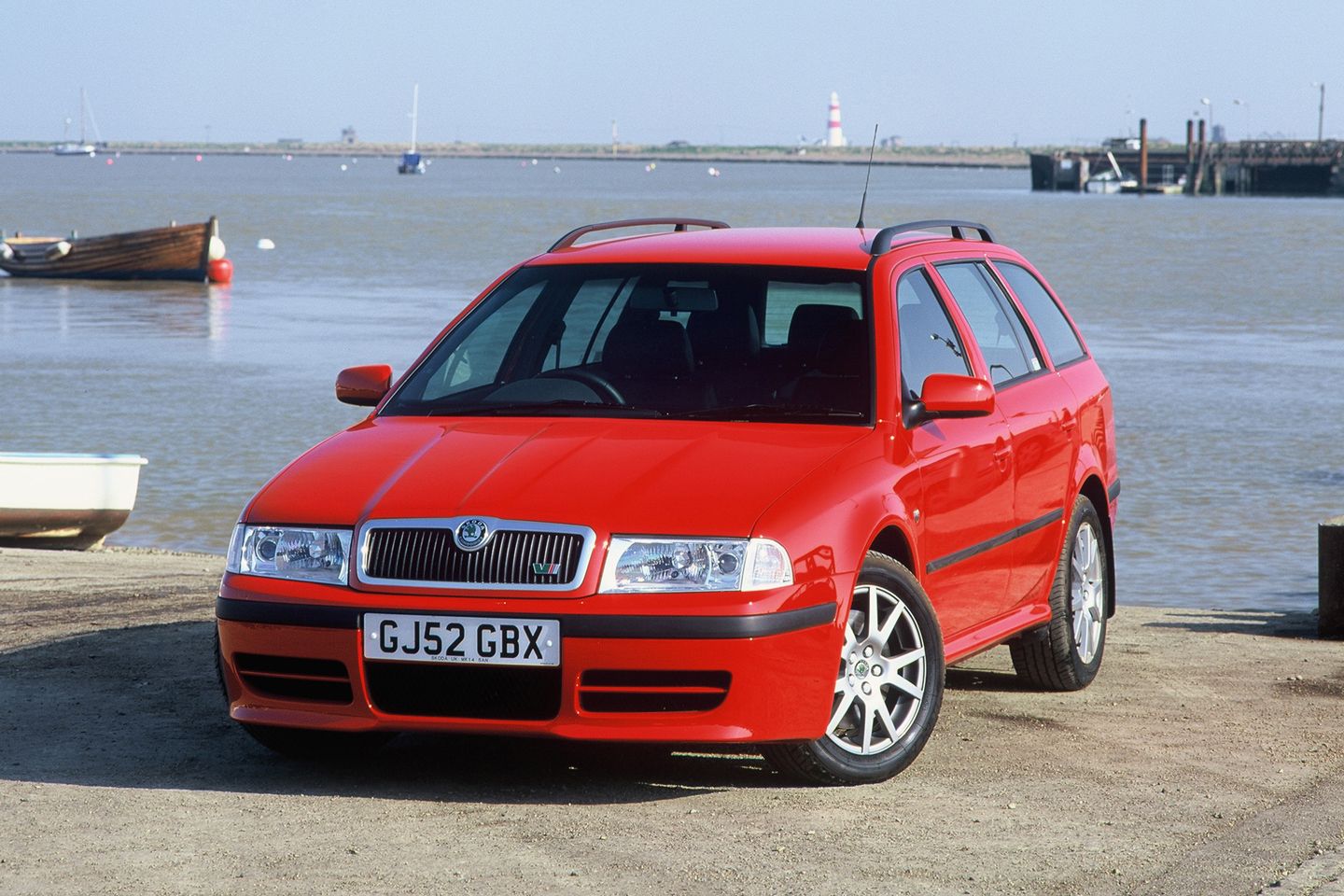

If we’re lucky, it won’t stray too far from the established playbook. Volkswagen’s boss has already suggested that the Golf will live on past the end of combustion, and you’d imagine that when Thomas Schafer says, “we have iconic brand names, Golf and GTI - it would be crazy to let them die and slip away”, Skoda shares the sentiment. After all, the commonsensical attributes that recommended the Octavia to so many buyers over the years, are timeless. For as long as there are cars to drive, some of us will always be persuaded by something that is practical, ostensibly well-priced, sensibly proportioned, decent to drive and solidly put together.
The current version is all these things. You can buy an Octavia vRS Estate for £35,235. It will come with a familiar 245hp 2.0-litre TSI four-pot connected to a six-speed manual. It will have 19-inch alloy wheels and handsome sports seats and look the part. It will do 40.2mpg and 0-62mph in less than 7 seconds. It will swallow a wardrobe. It won’t be astonishing to drive, yet it will get a hurry on without much fuss, and not a single soul will think you silly for buying it. A trifle dull perhaps, but sober decisions are often portrayed that way. And when a Ford Focus ST wagon is £38,350, and a Cupra Leon VZ2 Estate £41,010, the Octavia looks as rational as an onboard umbrella.
So rational in fact, that when it came time to salute the model’s 25th birthday, we skipped it altogether and borrowed the TDI version. It surely says much about Skoda and the Octavia that you can still buy a vRS with a diesel engine when even Ford has packed up the equivalent ST. Granted, Volkswagen will still sell you a Mk8 Golf GTD with the same 200hp 2.0-litre motor, but you can’t have it as a wagon - and there’s no option of all-wheel drive either. For £38,310, you can have it all in a vRS that looks no different than any other. It must rank among the most old-fashioned prospects still offered for sale new in the UK.


When we say ‘old-fashioned’ we obviously mean ‘from ten years ago’. The TDI is straight from 2013, when oil burners were at the peak of their pre-Dieselgate powers. Skoda’s delivery driver reckoned he’d got well beyond 60mpg on the motorway journey from Milton Keynes without trying especially hard. Giving no thought to it at all on a 200-mile round trip to the Cotswolds, the wagon averaged the best part of 55mpg and had barely knocked two illuminated notches off its fuel gauge by the time we got home. A week later, when Skoda collected the car after what seemed like half a million visits to the local tip with every conceivable size of cardboard box, it was still showing more than half a tank. That, dear reader, is what we like to call the good old days.
Of course, there is no yin without the corresponding yang. The TDI claims 295lb ft of torque from 1,750rpm (just 14lb ft shy of a Golf R) but thanks to Skoda’s conspicuous efficiency bias when it comes to throttle response, your big toe will be halfway to the bulkhead before forward progress eventually aligns with your expectations. So while there’s a hearty amount of acceleration in the vRS repertoire somewhere, you need to go looking for it - which is somewhat counter to the ever-ready, real-world performance that traditionally distinguished fast diesels from their peaky petrol stablemates.
It makes the Octavia seem slightly more ponderous than you’d hope from something designated vRS - but perhaps that swerves around the entire point of badge in 2023. Perhaps Skoda knows the Octavia buyer so well that it is confident any scepticism about the model’s responsiveness will be overshadowed by the satisfaction of only visiting a fuel station once in a blue moon. Perhaps it is sage enough to know that just because said buyer has opted for the vRS model doesn’t mean that he or she has abandoned the pragmatic worldview that explains anyone seeking out a Skoda in the first place. Perhaps, after 25 years of beating the likes of the VW Passat at its own game and still being on sale in unlikely, rumbly go-faster format, the Octavia simply is that clever.


The original was the purest for me, no frills, not even a 6 speed gearbox, the one that gave me the most laughs was one that Revo had thrown all of their stuff at (and which had 1” smaller wheels in estate form)
My current one was due to go in November but trying to find something to replace it without spending a fortune has made me keep it, with the thought that I’d have to spend ££££ to get something that does exactly the same as my current one

Bought at ~40k miles. New block and head at ~50k miles when the chain slipped. Outside of both new and used warranties, Škoda footed 100% parts and 90% labour, as I knew it was a design fault they never recalled. Fair play: £800 to me instead of over £6k. Now ~104k and sailed through last service. Can be heavy on 18” tyres, despite me driving sensibly.
Over 40 mpg on motorway schleps; mid-20s around town and shorter drives.
Performance is plenty for modern roads, pot-holes and camered every 100 m. Dispatches Wiltshire tractors and motorway slip-road dawdlers with aplomb.
Proving very, very difficult to justify replacement, particularly in this market of elevated prices. However if I sold it privately I’d lose ~£1.5k; not bad for 7 years of depreciation!
As for what happens to the nameplate next, this month an electric Octavia estate is rumoured for unveiling. If they can get that right in terms of range and price, it’ll whip the MG5 and bring efficiency the SUVs can only dream of. A perfectly sensible alternative for modern-motoring. Fingers crossed!
Snap under-steer and back ache are the predominant memories of that one.
Then a MK2 PD110 4x4 turned up - by then they'd inherited the VW ability to display more warning lights on the dash than you knew could exist. Much much black tape to try and reduce the glare when driving at night. Under-steer replaced by traction control until the rear wheels got 3% of the torque after 15 minutes of wheel spin. Also... back ache.
The 1.5 lump was troublesome for some, in that it would hesitate when the throttle was applied, or would 'kangaroo' from low revs. I have never had any issue like that with mine. The two cylinder deactivation technology is completely undetectable when it cuts in on a light throttle load, a small light on the dashboard the only clue it's working.
Other than a fuse for the ciggie lighter and a numberplate bulb, nothing has ever gone wrong and we have never been left stranded in 55k miles.
I saw 133mph on the speedo in Germany a few years back, and it'll cruise quietly at 80-90 without fuss. Acceleration is surprising for a relatively small lump, but it's got 150bhp and is supposed to hit 60 in 8.2 seconds.
Every time I see a vRS I wonder if I should have spent the extra to get one, though I hear that without adaptive suspension they're rock hard to drive. Given the state of the roads in this area, most of which look like they've sustained earthquake damage, the 17" wheels are probably better suited.
The local Skoda dealer invited me to sit in the new model and have a look. Absolutely no way. All the manual controls seem to have migrated to the infotainment system which is far too distracting and involves too much time taking your eyes off the road.
It's not the most imaginative choice - I bought this after getting a lift with a mate in his Octavia - but as a do-it-all car, it really is impressive and hard to beat. It's easy for the dog to jump in the back, has masses of space, loads of legroom in the back, comfortable for me to sit behind someone my height - 6'2" and it'll do 45mpg all day and 50mpg is available if you're light on the throttle. I have a motorbike for my speed thrills.


Gassing Station | General Gassing | Top of Page | What's New | My Stuff